
General questions about the archive
-
We used to buy parts from an organ repair shop founded by a former employee of the Wurlitzer factory in Corinth, MS. When the factory closed, he bought all of the parts and all of the technical drawings and used them to repair organs for the next 35 years. We visited his warehouse two days before everything inside was scheduled to be destroyed, and bought the drawings. More details here.
-
We’ve estimated that there could be around 100,000 documents in the collection.
-
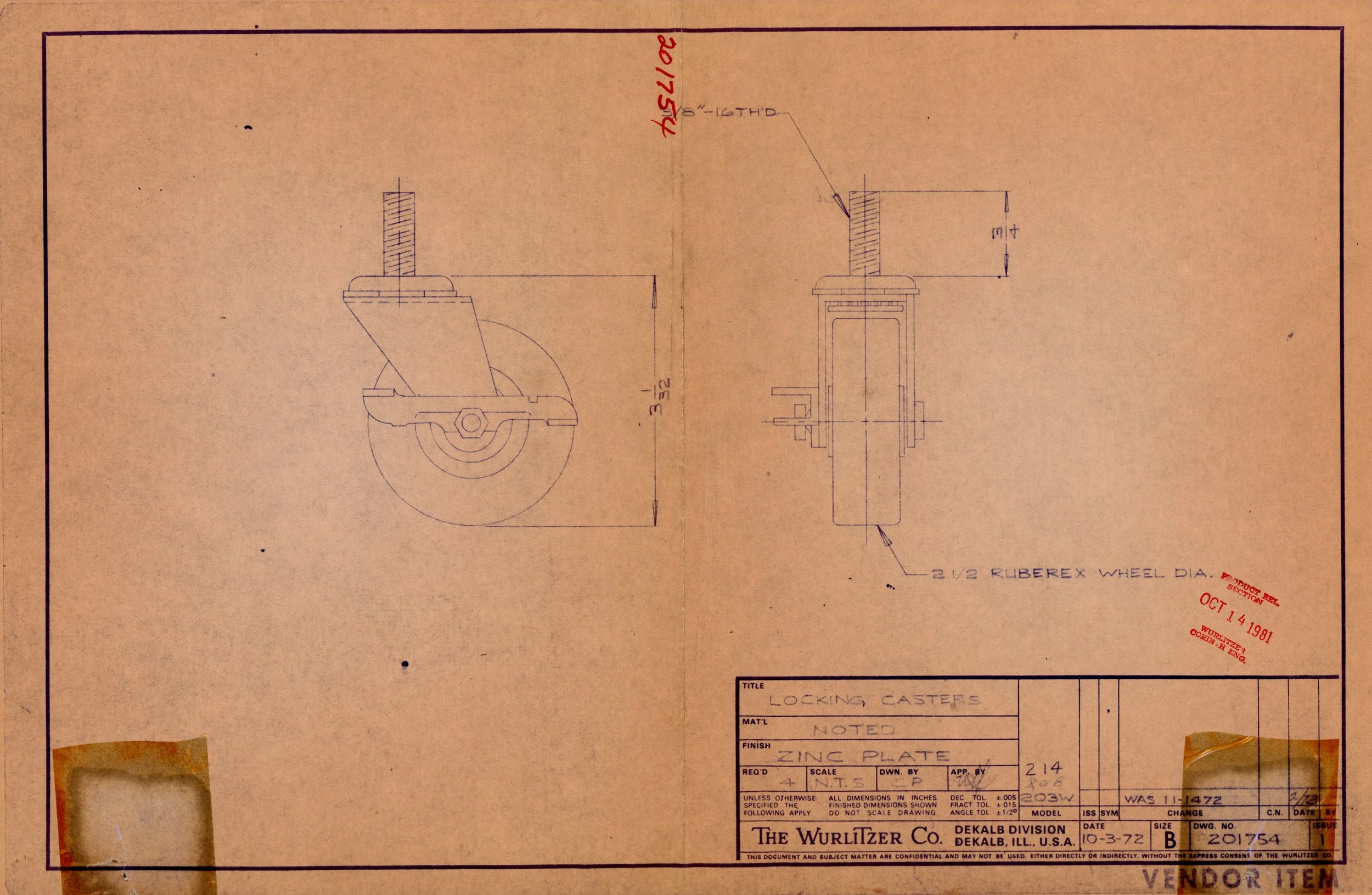
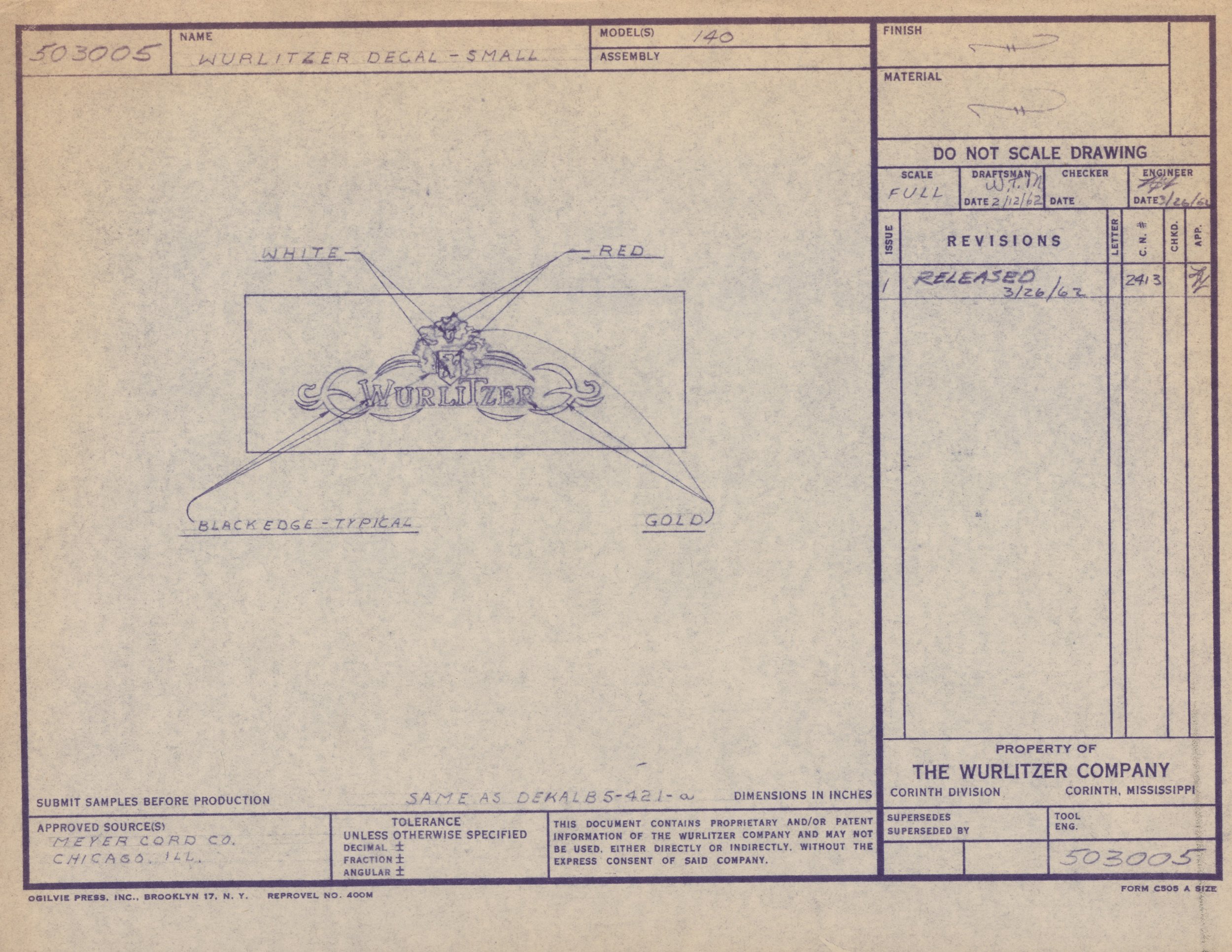
Because the collection is from the Corinth factory, the vast majority of the drawings depict instruments manufactured in Corinth—organs, electronic pianos, and their accessories. However, some jukebox and acoustic piano drawings did slip into the archive. See them here.
-
So far, we have scanned about 2,000 drawings. We are trying to scan at least a few drawings every day.
-
When we first acquired the collection, we thought it would be best to donate it to a museum or library that already handles archival materials. We reached out to a few places (including the Smithsonian, which already has a smaller collection of Wurlitzer Co. papers), and many of them appreciated the archive and were open to giving it a home. However, they could not guarantee that the documents would be digitized. Places that agreed to digitize the archive could not promise any firm timeline.
Because the documents are immediately useful to techs and musicians, we decided to keep the documents and digitize them ourselves.
Repairing keyboards with the help of the archive
-
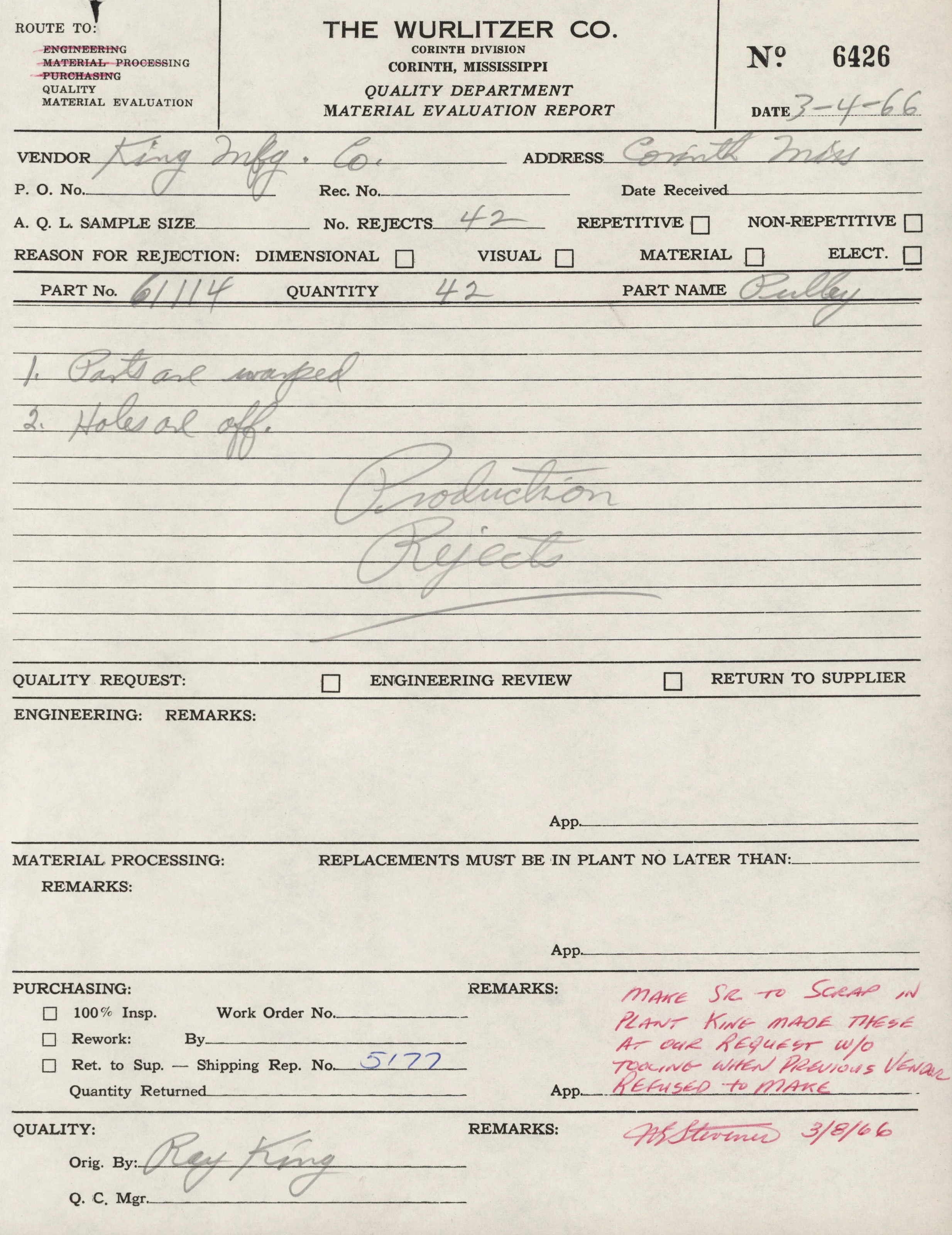
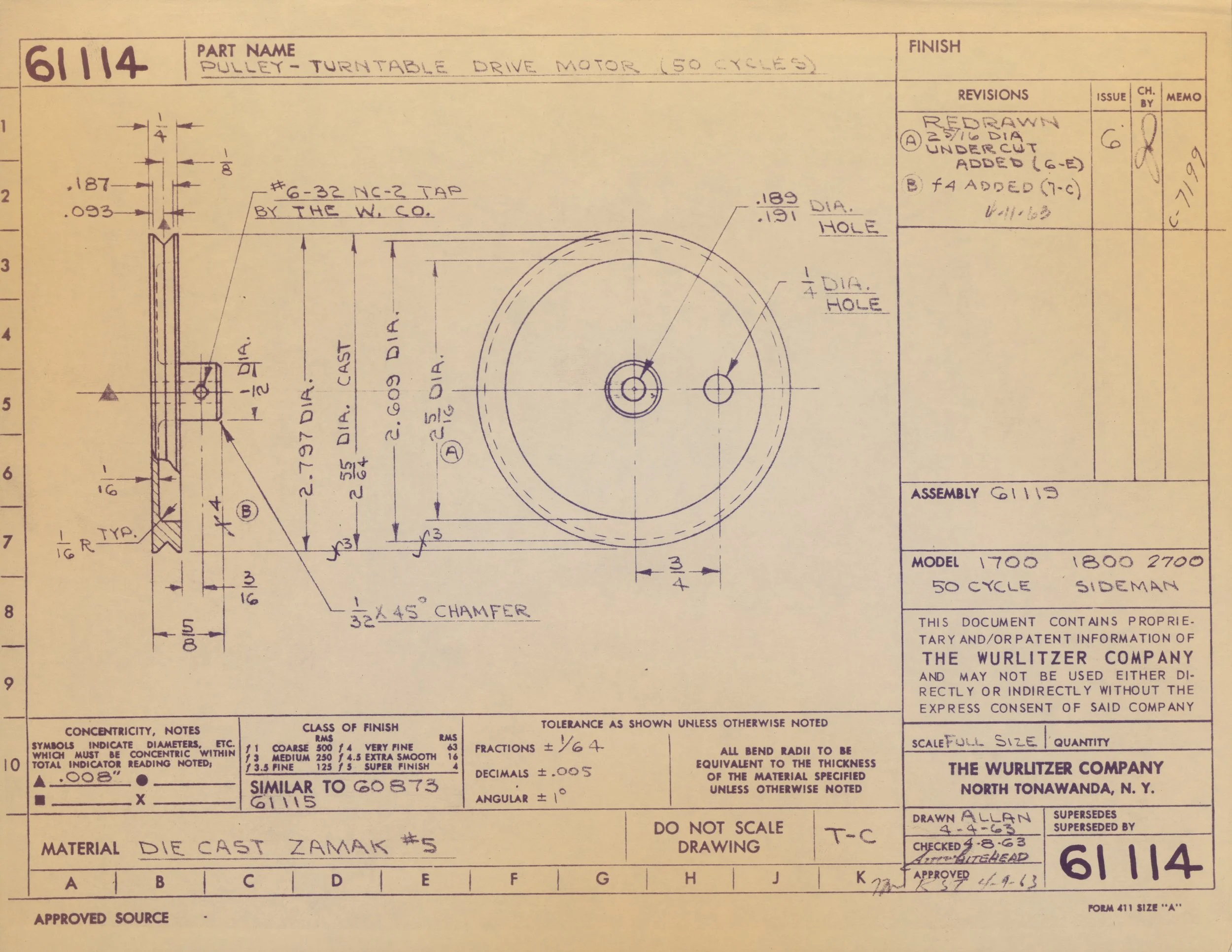
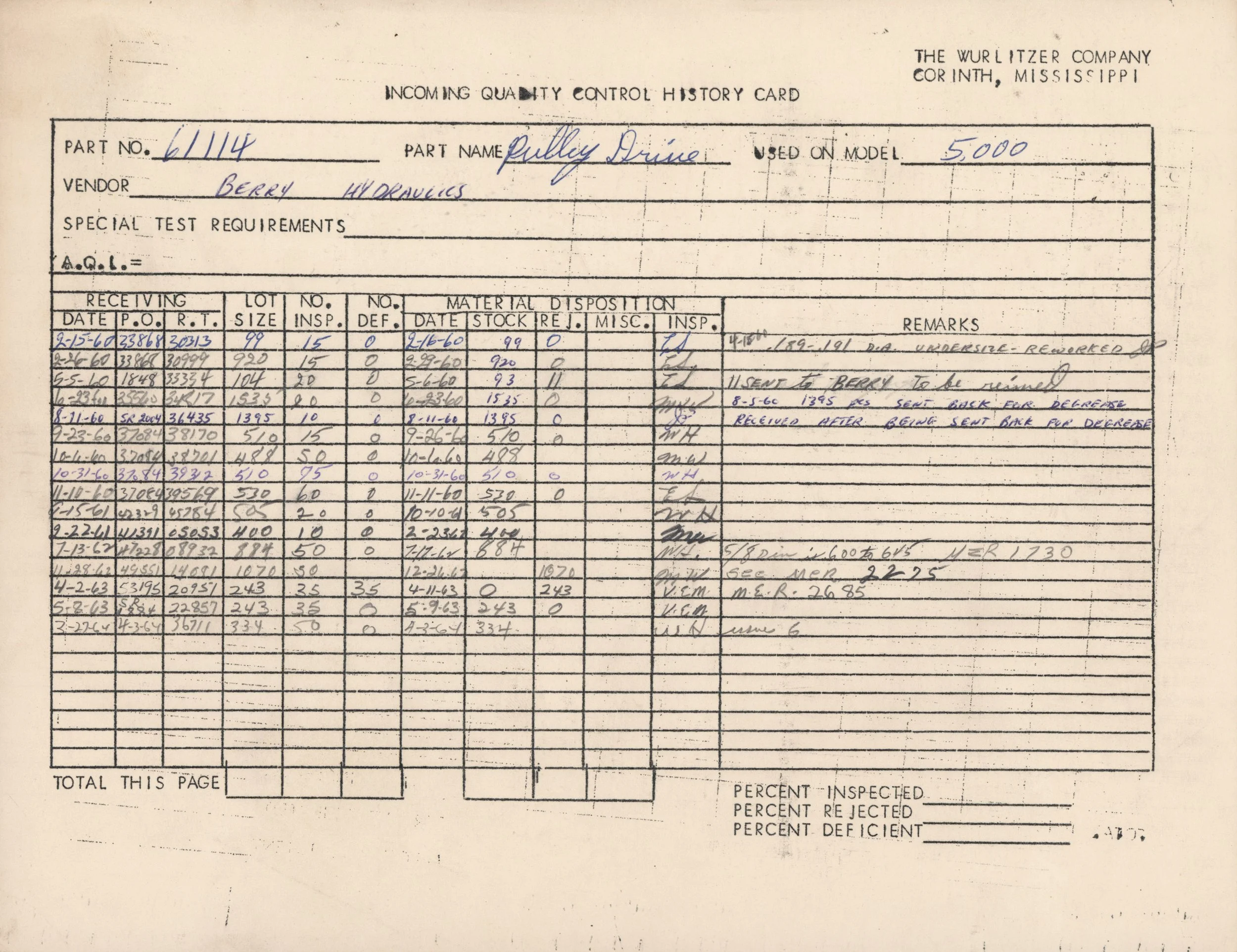
The Wurlitzer part number is a unique number that identifies each part in the instrument. Sometimes, a group of parts (called an assembly) has a part number.
Part numbers are usually 6 digits, but some older parts have 5-digit numbers. Some electronic pianos have six-digit part numbers in this format: 11-XXXX. Older instruments from the 1940s and 1950s might have idiosyncratic part numbers.
-
Sometimes, the part number is written or engraved on the part itself. This is often the case with parts like transformers.
Often, the part number can be found in the service manual.
There is also a document called the Bill of Materials, which lists the part numbers for every part in a given keyboard. We have many Bills of Materials for many Wurlitzer instruments, but not all of them, because some were too contaminated with mold to take out of the warehouse. Also, the Bill of Material pages are usually oversized, so we probably won’t be scanned until the next round of scanning.
-
Yes! If you’re looking for something specific, request a part here.
We can check if it’s a document that has already been scanned. If not, we can keep an eye out for it while we work through the collection.
-
The service manuals were intended for contemporary techs to get the information they needed to perform quick fixes on the instrument. However, many of the fixes that techs do today aren’t quick. In many cases, techs have to rebuild big chunks of the instrument, or sometimes even overhaul the entire instrument. To do this, we need more info than the service manual can provide.
When the service manuals were being printed, a tech could call up the Wurlitzer Co. and request a drop-in replacement—even entire amplifiers, electronic piano harps, or organ manuals. If we need those things now, we have to make it ourselves. The information in the technical drawings can show us how.
Scanning the archive
-
We are using a Plustek Opticpro A320E, which has a maximum scanning size of 12×17”. Once we scan all of the smaller documents, we may switch to a different scanner or a different method of scanning.
-
No, we are very careful to position the drawings in the scanner. Every scan is very true to what the original document looks like.
However, some of the drawings may look crooked because they are duplicates of an original drawing, and the original method of duplication was done quickly, but someone who just wanted a working copy—not necessarily an archival copy.
-
We are scanning the drawings as an 800 dpi tiff file. Each 8.5×11” drawing is around 170 MB, and they look great. It’s possible to zoom in and see all of the details, down to the texture of the paper and the ballpoint pens sometimes used to mark them up.
We are scanning at high resolution just to future-proof the project, and allow for printing at any size required.
The website images are still fairly high resolution—around 3200px at the long edge.