

Electronic organ FAQ
Why are there so many organ models?
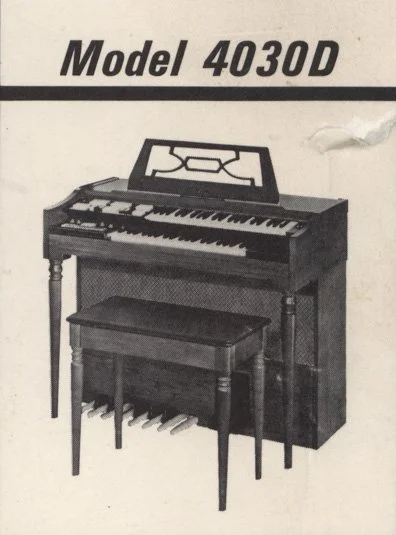
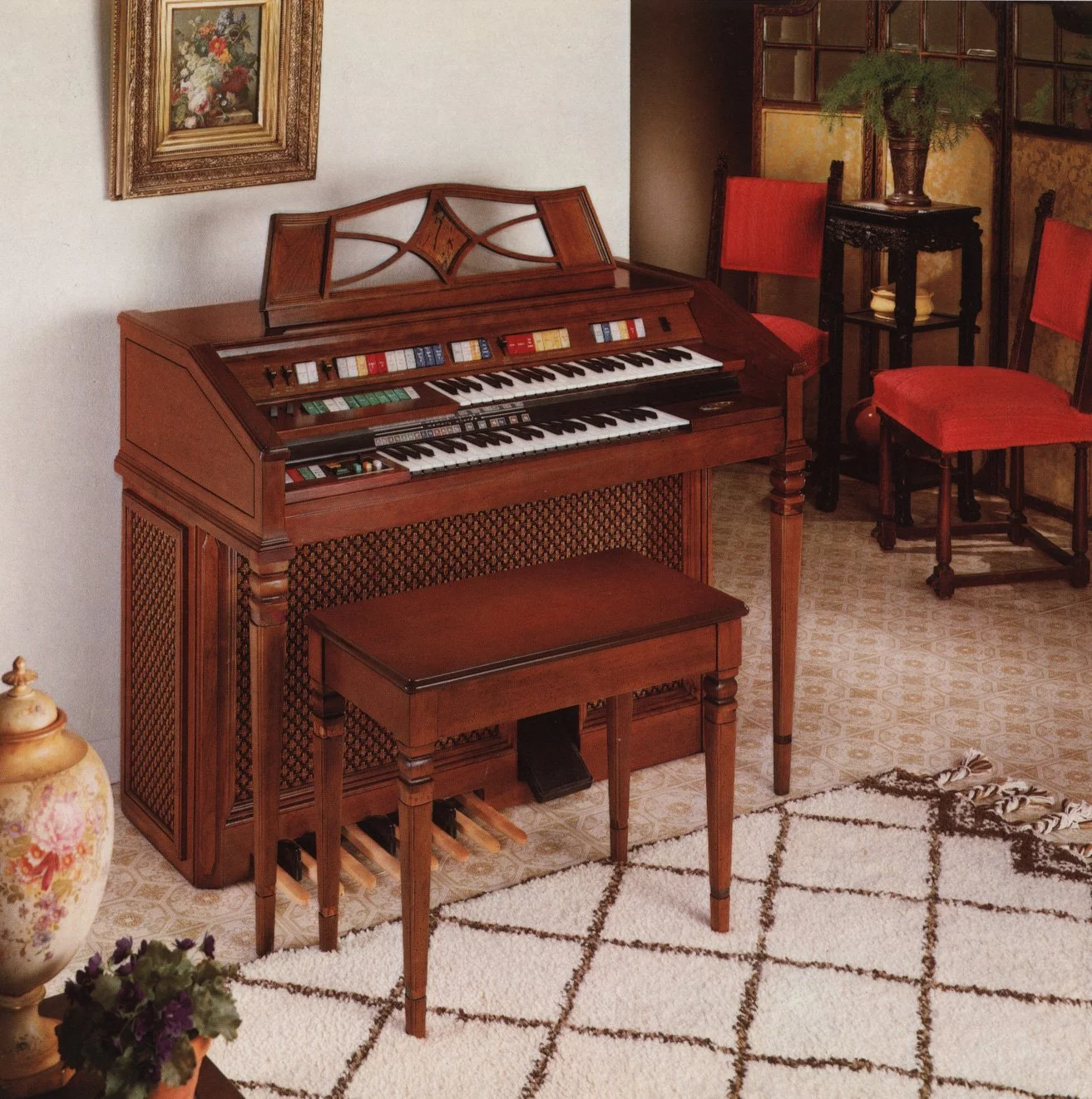
Wurlitzer was a very large company, and their goal was to sell as many organs possible to the maximum number of people possible. Because it’s a lot easier to persuade someone to buy an organ at all than it is to persuade an experienced organist to swap instruments, much of Wurlitzer’s product line targeted beginners and non-musicians. Wurlitzer catered to the beginner market by reducing the cost and weight of the instruments, and by adding features that made the organs easier to play. To that end, Wurlitzer manufactured dozens of organ models—or hundreds, if you count all of the variations.
In order to compete on price and size, Wurlitzer continuously adopted new technology that reduced the weight and density of the organ’s electronics. Around the early 1960s, Wurlitzer switched from vacuum tube electronics to transistor circuits. A decade later, Wurlitzer further miniaturized its electronics by replacing discrete transistor circuits with analog integrated circuits, which featured hundreds or thousands of transistors in a package the size of a fingernail. By the late 1970s, Wurlitzer continued to follow advances in electronics by designing organs with digital tone generators.
Although some manufacturers reduced weight in order to increase portability, Wurlitzer generally kept their organs in heavy wooden cabinets, borrowing design cues from its acoustic piano department, which was headquartered in DeKalb. Instead, Wurlitzer took advantage of miniaturization in order to add more and more features to its organs, including drum machines, synthesized tones like banjo and guitar, and coupler circuits designed to make awkward players sound more natural.
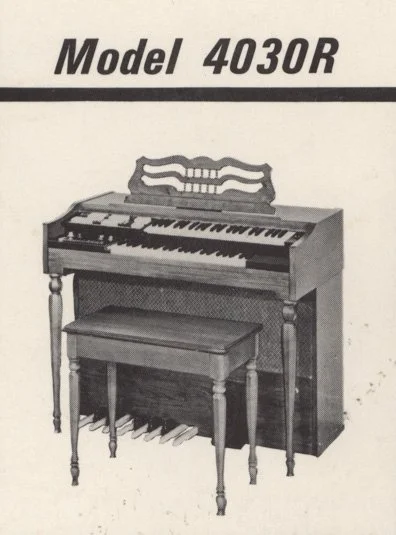
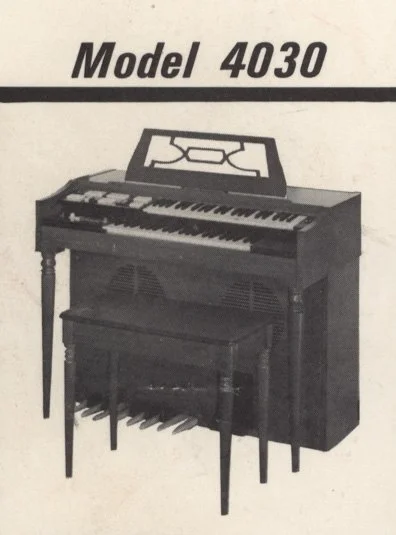
The ballooning number of organ models released in the 1970s reflects a catalog that added and subtracted incidental features in order to meet every possible price point. There are several families of organ that have very similar external appearances or internal electronics, but add or omit certain banks of switches or speaker configurations. Other organs trade intermediate features like coupling circuits for the simplified functionality of chord buttons. Many models reflect a variation in cabinet style.
In many cases, variant models can be inferred from their model numbers. For example, the 400 and 415 are very similar. However, Wurlitzer reused a handful of model numbers and sequences, so it is difficult to guess whether two models are alike just from their numbering. Four-digit models beginning with the number 4 are particularly ambiguous. They include free reed organs (such as models 4420 and 4480), vacuum tube divider organs (4100, 4200), transistor divider organs (4050, 4300, 4430) and digital organs (4000).
What is the best organ technology: vacuum tube, transistor, analog integrated circuit, or digital?
The quality of an organ depends on the amount of care and detail that went into its manufacture. Technology is one factor in what makes an organ sound good, and it’s hard to evaluate the technology separately from the other factors that went into the creation of the organ.
Vacuum tube, solid state, and digital organs sound and play different, but the differences between them are not necessarily the result of intentional design decisions. At any given time period, Wurlitzer was not attempting to make an organ with a “solid state sound” or a “tube sound.” They were just making organs. If anything, they wanted the organs to sound like pipe organs. Any “warmth” or “linearity” was a side effect of the difficult task of trying to make an electronic oscillator sound like a pipe full of air.
Like all organs, Wurlitzer organs are a mass-produced musical instrument. When Wurlitzer was manufacturing organs, they chose whatever technology allowed them to sell a certain style of organ to a certain type of consumer at a certain target price point. When a more exciting, more efficient technology came along, Wurlitzer abandoned the old circuits and embraced the new ones.
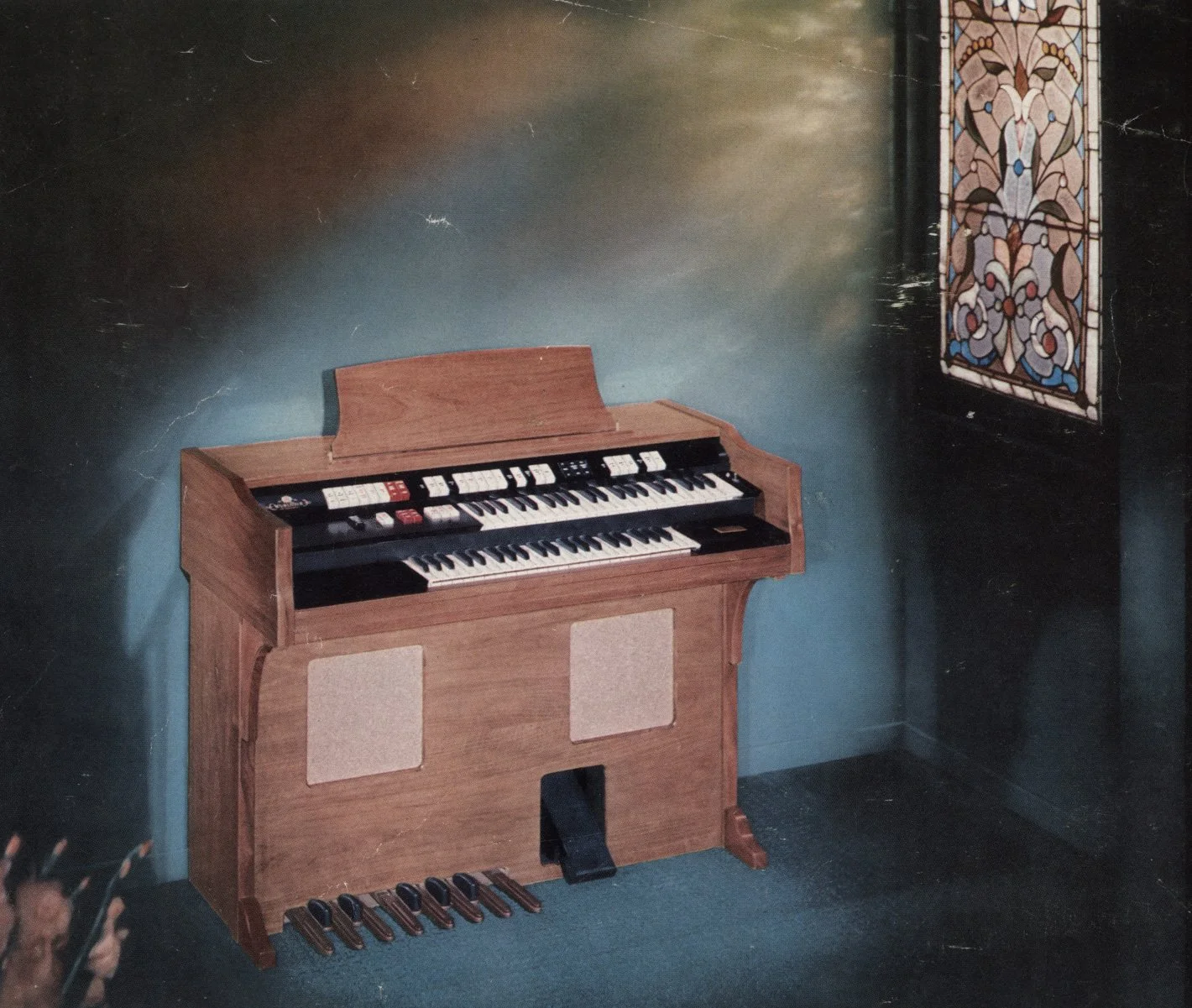
The period during which Wurlitzer sold organs happened to be a very dynamic time for consumer electronics. Technology was changing very quickly, and Wurlitzer was a huge company that was capable of pivoting to whatever technology was the cheapest and most efficient for the products that Wurlitzer wanted to sell. In some cases—such as reed organs and electronic pianos—Wurlitzer pioneered the industry by buying patents from inventors and using proprietary technology to lead the market.
The upside to living in the digital age is that we can compare and contrast all of the old technologies. We now know that the gradations of difference in various tube and solid state circuits can be used creatively, in service of new ideas in music. Viewing these technologies as different stages in the march of progress only implies that the most important thing about art is how fast and how cheaply you can get it done.
What would have happened if Wurlitzer continued developing older vacuum tube and solid state technologies, instead of dropping them the moment something new came out? What kind of sounds and instruments would we have today if Wurlitzer hadn’t been so intensely focused on minimizing cost and maximizing efficiency?
The documents in this archive can help us imagine what that would look like. Here, we have maps of all the side roads and forgotten paths that Progress swept past without a backwards glance. Who knows what we’ll find when we study them?