
Browse the archive
COLLECTIONS | INSTRUMENTS | FEATURES | COMPONENTS | MANUALSThe Wurlitzer Corinth Division Records contains approximately 75,000 pages of engineering drawings, correspondence, and quality control documentation used in the production of Wurlitzer electronic pianos between approximately 1946 and 1985.
So far, we have only digitized a fraction of the collection. Our goal is to make these pages accessible to musicians and researchers who may be interested in studying American manufacturing and electronic instruments.
Browse collections
We have gathered some of our favorite parts of the archive into browsable pages. With tens of thousands of pages yet to be digitized, there are many more documents in each of these categories. We’ll add them as they are scanned.
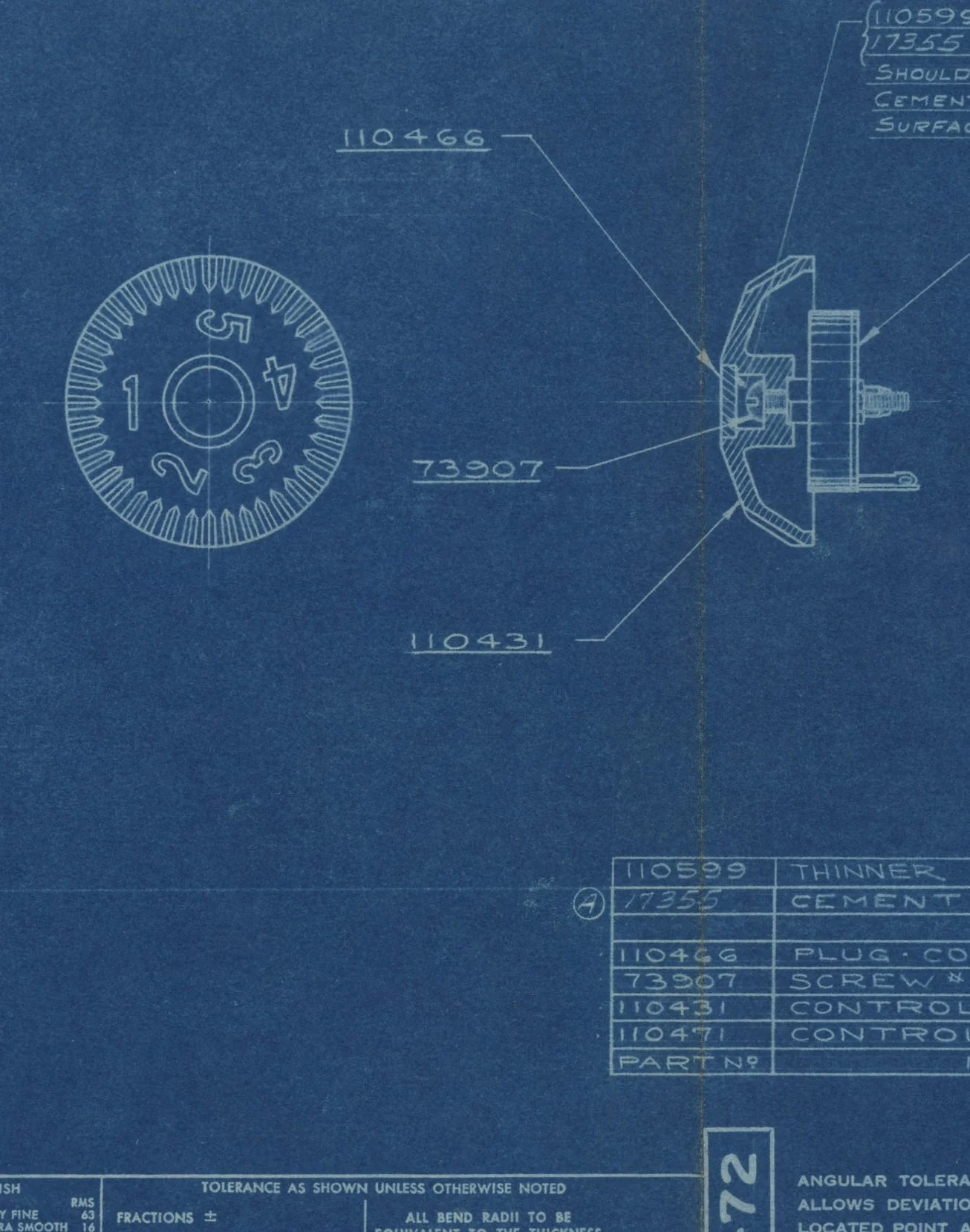
CONTROLS, KNOBS & SWITCHES
SPEAKER CLOTH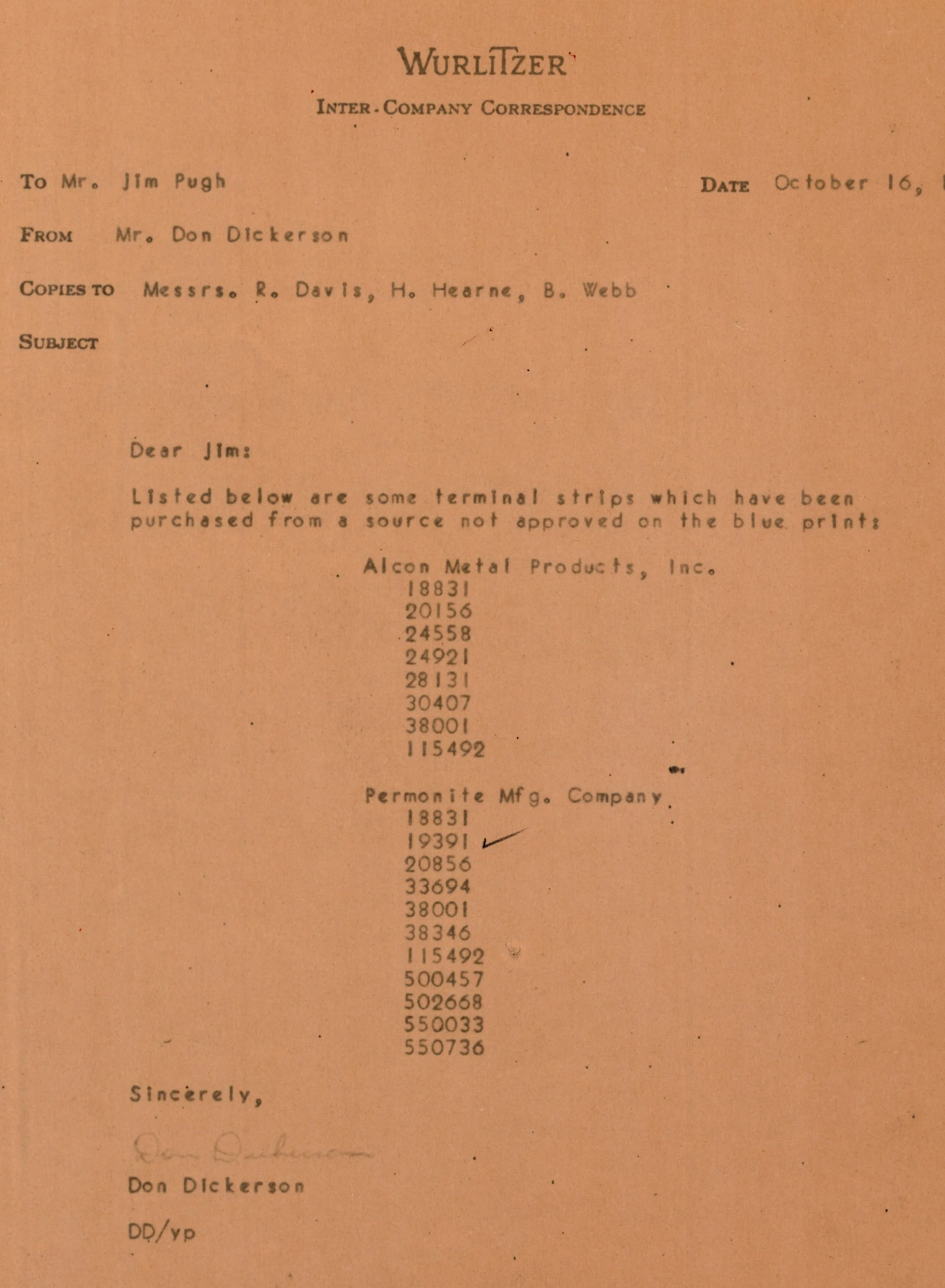
LETTERS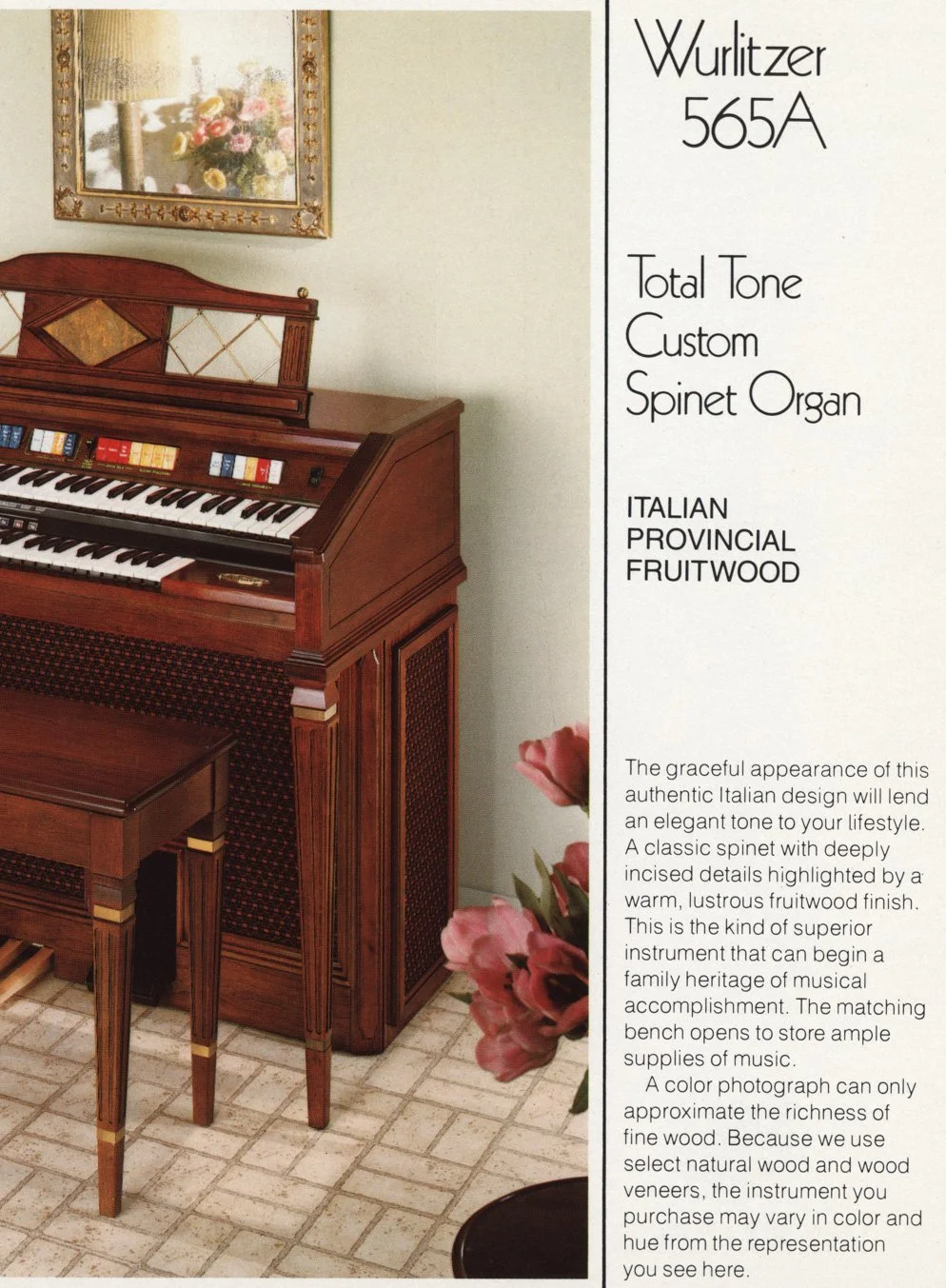
CATALOG PAGES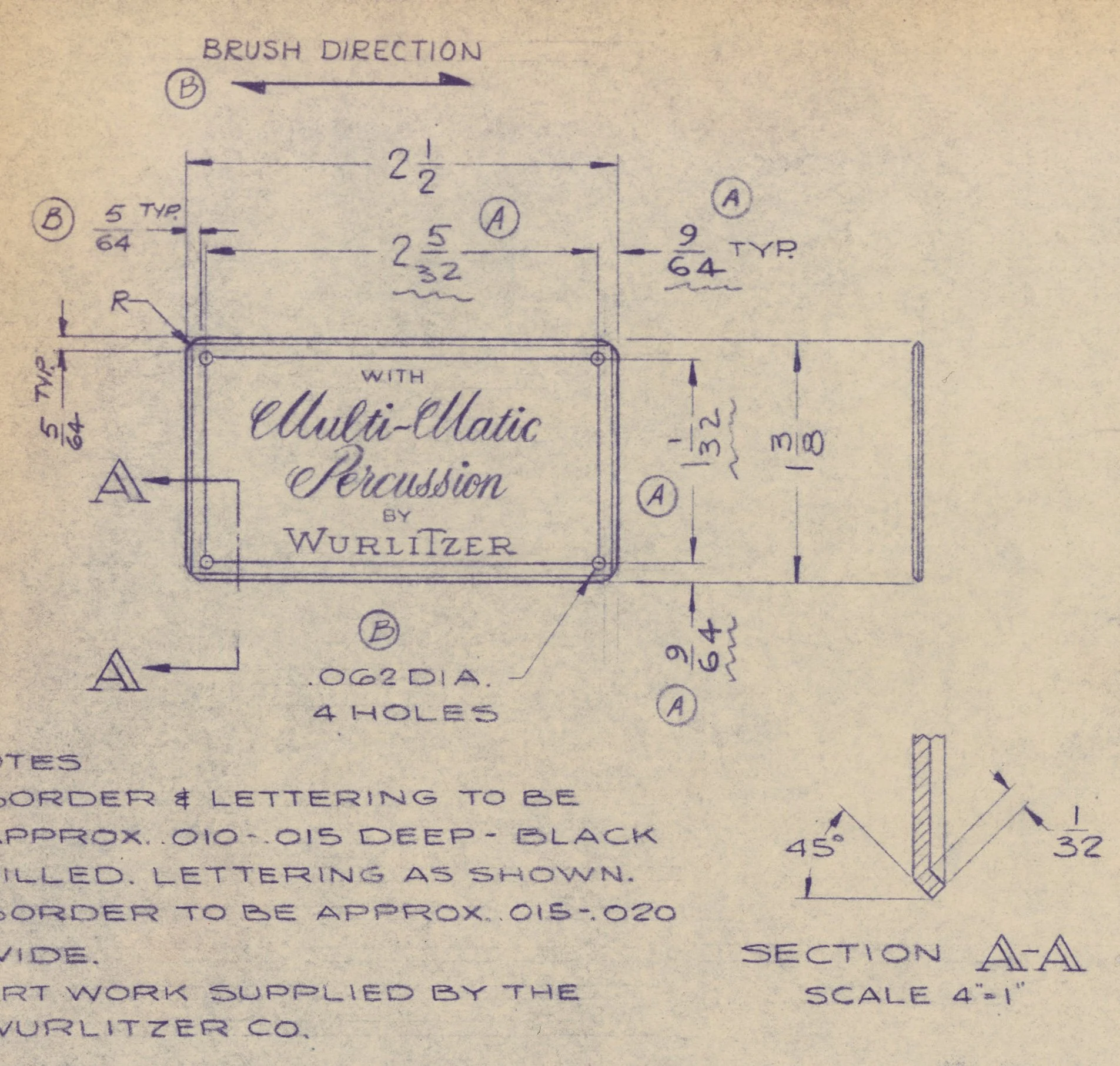
NAME PLATES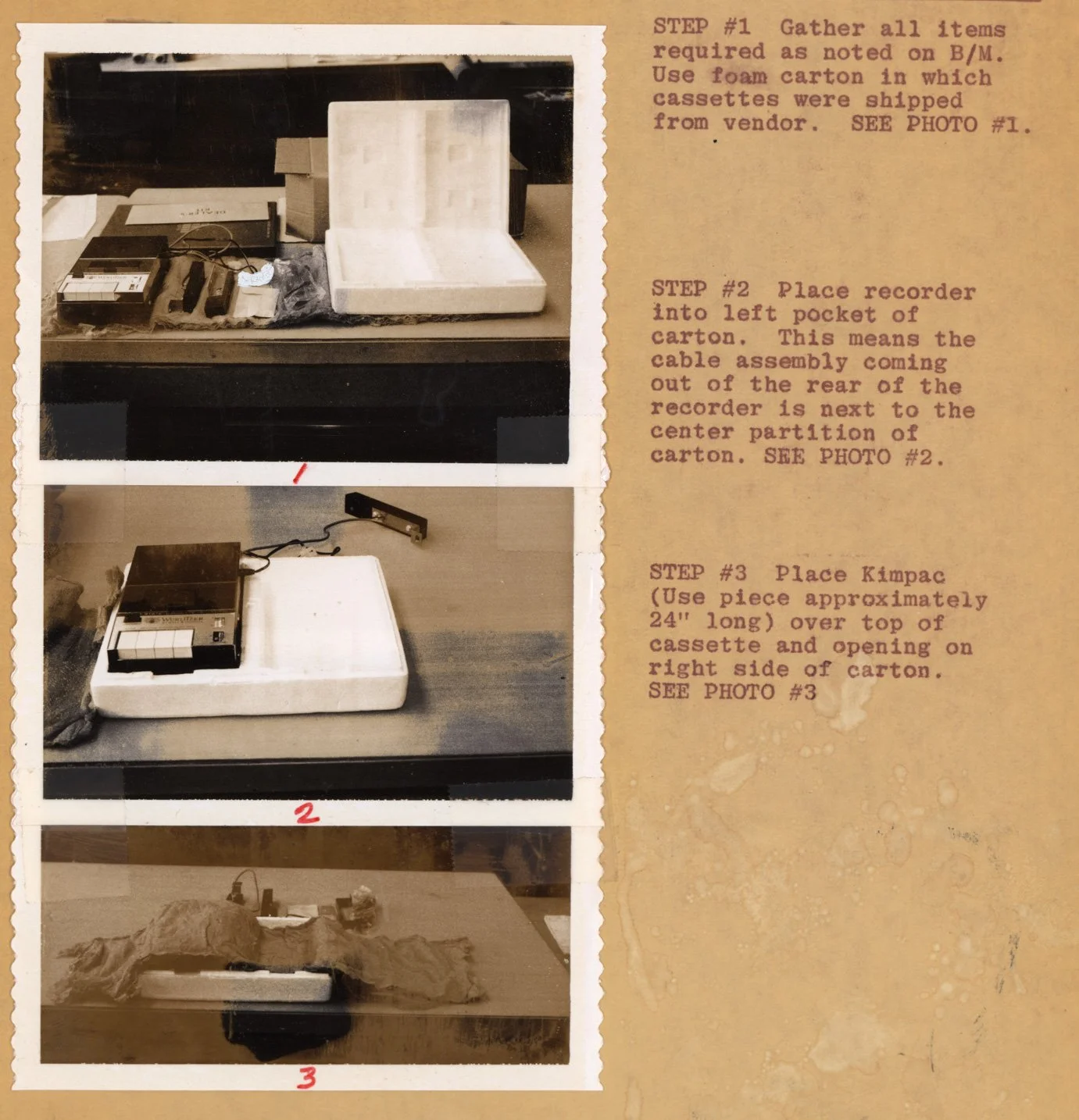
ILLUSTRATED REFERENCESBrowse by instrument
One way we have organized the drawings on this website is by instrument model. If you have a favorite Wurlitzer instrument, you can browse it here. Or, explore the electronic instruments that Wurlitzer manufactured in the decades that the Corinth factory was open:
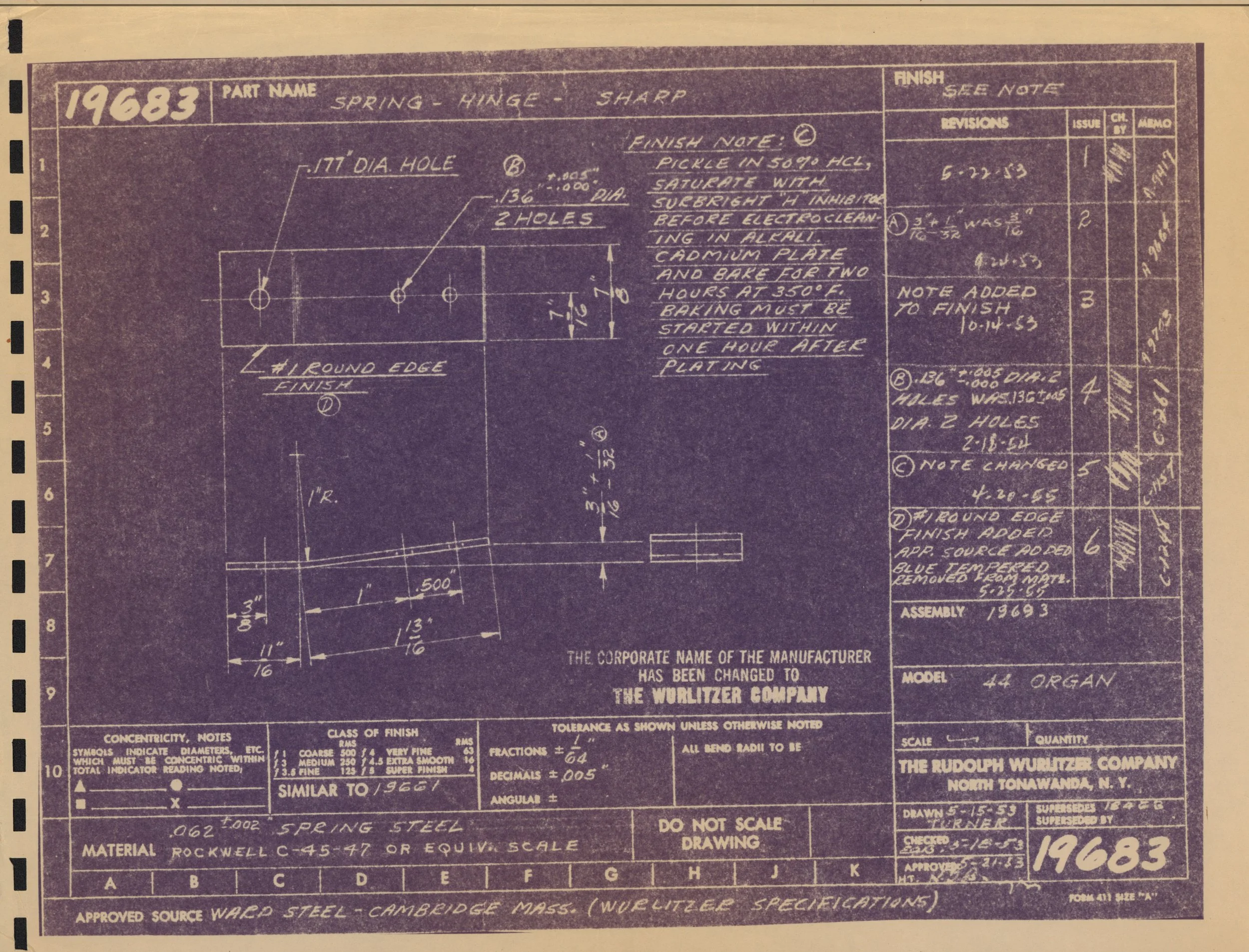
Reed organs
Released in the same year as Hammond tonewheels, reed organs are arguably the first electronic organ. Wurlitzer bought the technology in the 1940s, and produced massive, 61-note reed organs for several years before scaling down the instrument for home users.
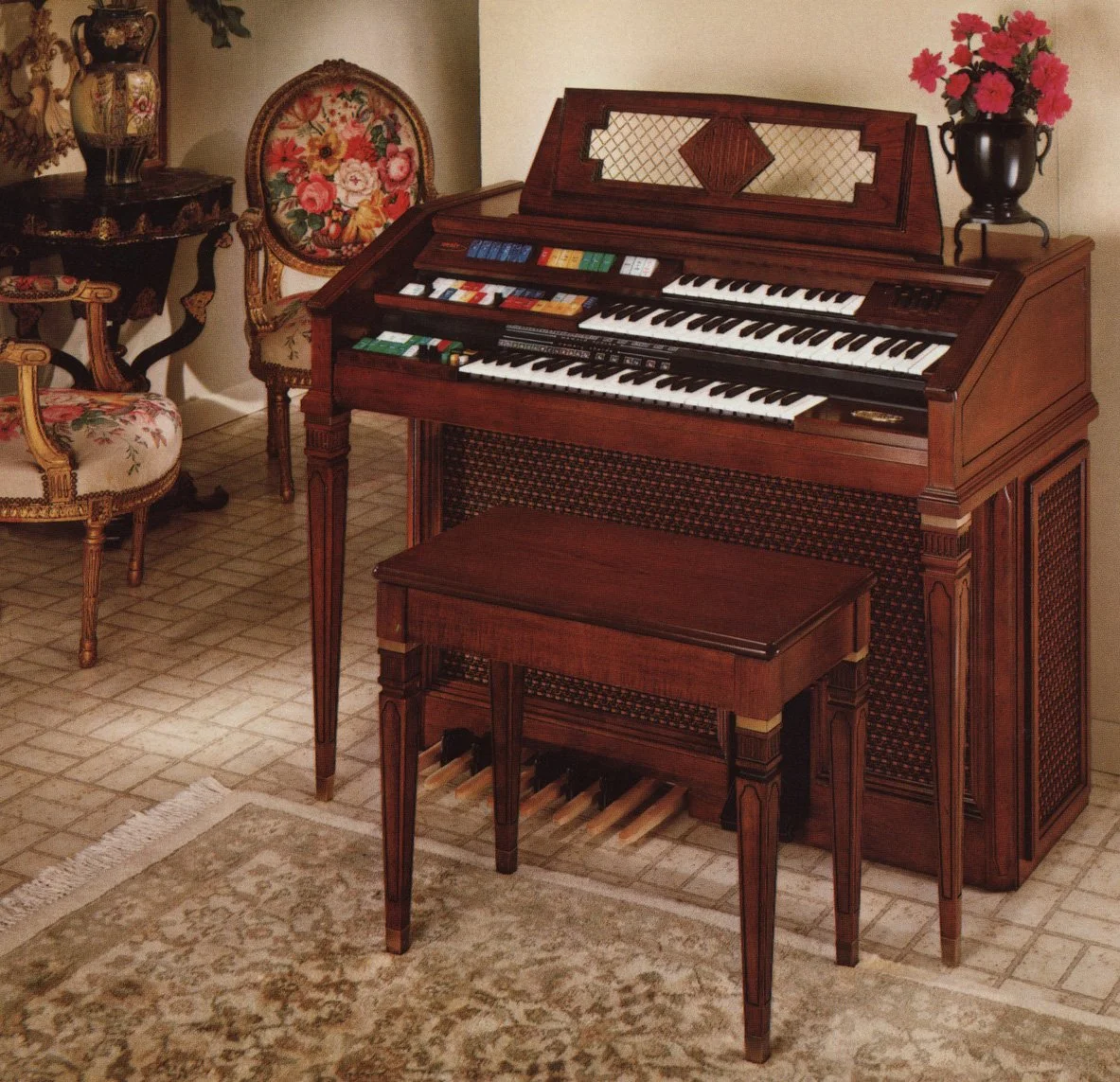
Electronic organs
Wurlitzer produced new and innovative organs during the Corinth factory’s entire timespan. They closely followed innovations in consumer technology to ensure that all their electronic organs had every feature that both new and experienced musicians could ask for.
Electronic pianos
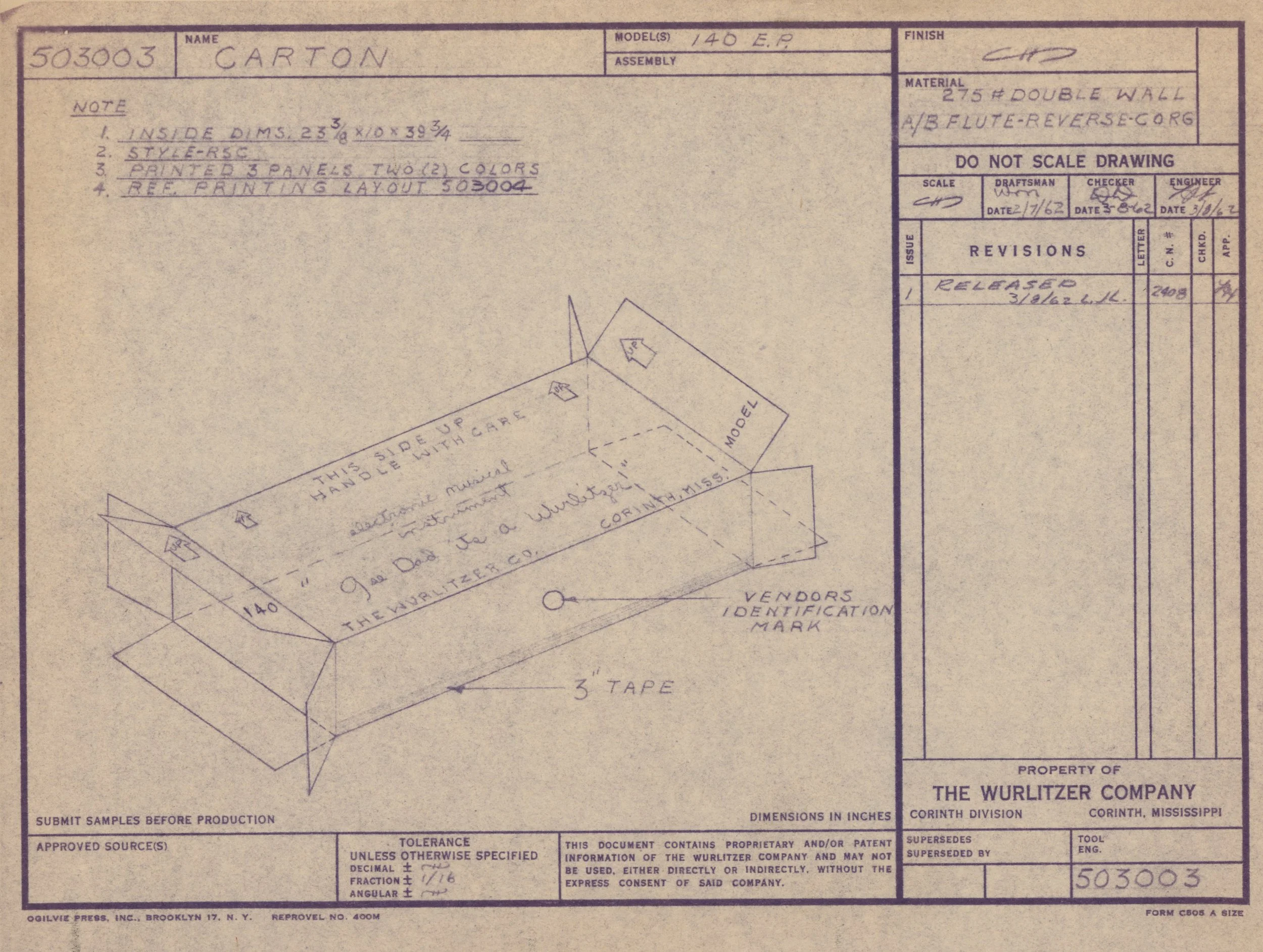
The iconic Wurlitzer electronic pianos have an acoustic piano feel (thanks to a real wooden piano action) and a one-of-a-kind electronic tone (thanks to its electrostatic pickup). Wurlitzer began manufacturing them in its DeKalb factory, where Wurlitzer acoustic pianos were made, then moved production to Corinth in the 1950s.
HIGHLIGHTS
140-series EPs, styled in a bent wood midcentury cabinet
200-series EPs, featuring space-age ABS plastic lids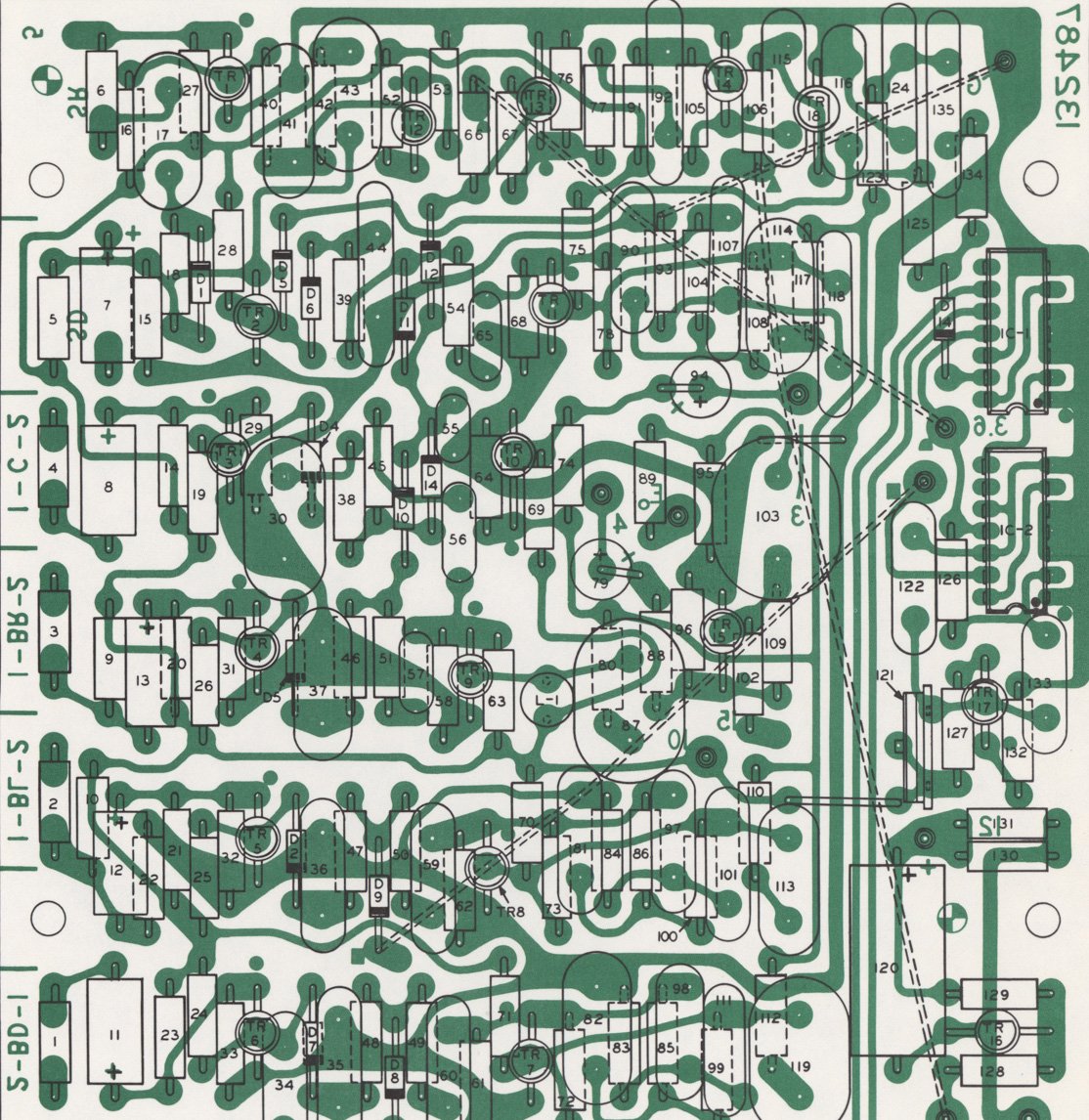
Drum machines
Wurlitzer manufactured the first commercial drum machine, the Side Man, which used a spinning plate of electrical contacts to generate tones. Later, they miniaturized the drum machine so that it could be included as a built-in feature for Wurlitzer electronic organs.
HIGHLIGHTS
5000 Side Man, the first drum machine
5020 Swingin' Rhythm, a compact analog drum machine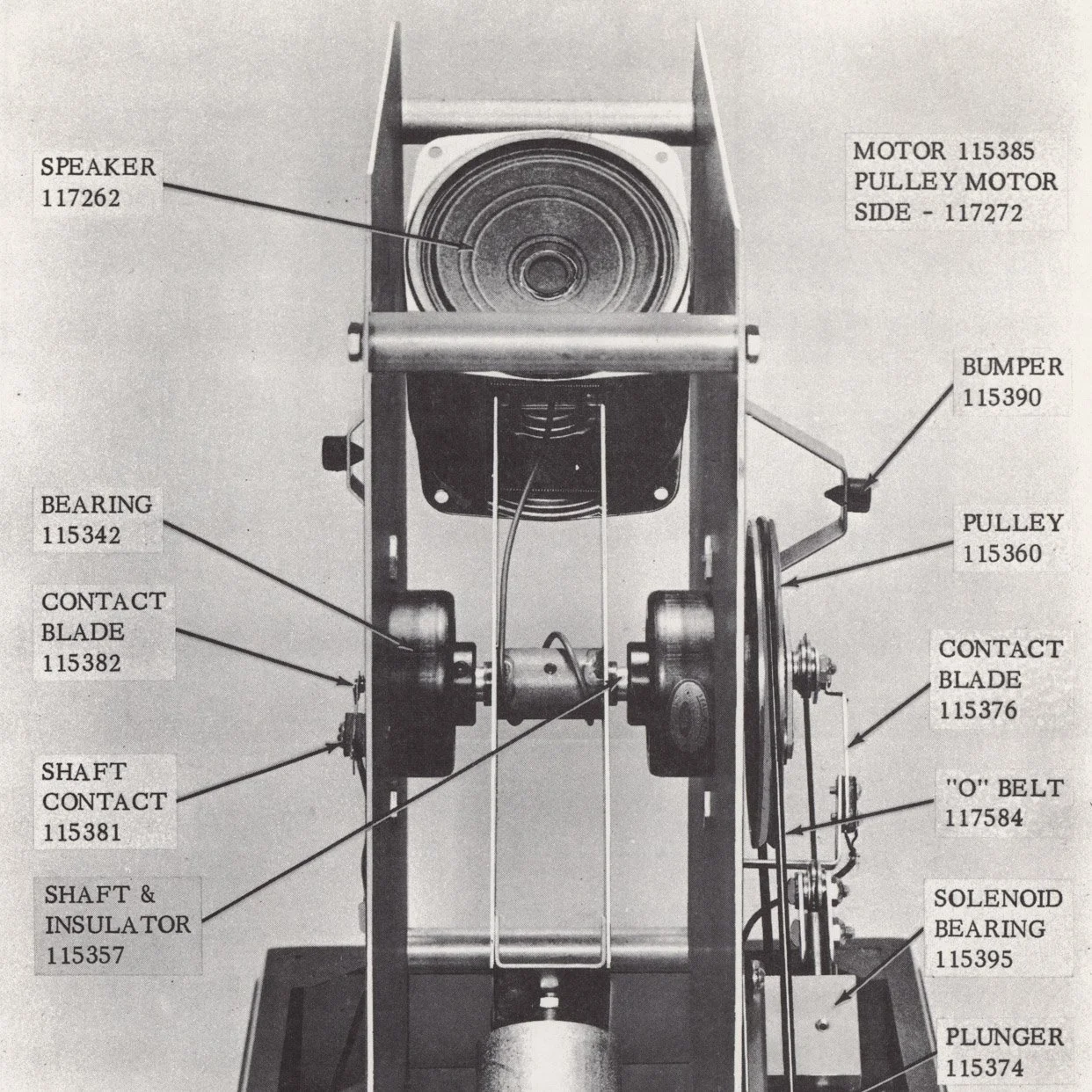
Tone cabinets
Wurlitzer manufactured auxiliary amplifiers intended to give its organs more power and effect when installed in churches and auditoriums. Some, such as the 420, used a rotary speaker technology that was unique to the Wurlitzer Co. Others, like the 920, generated its tremolo through electronic oscillators.
Browse features
Wurlitzer made dozens of models of organs—even hundreds, depending on how you count them. Most contemporary models were more or less the same, but had different styles of cabinet and included different features. Some features were meant to capture the beginner market, while others were designed for more skilled musicians.
We have collected some of the features of Wurlitzer organs together for browsing. We’ll add more groupings as we continue to digitize documents in the archive.
Browse components & processes
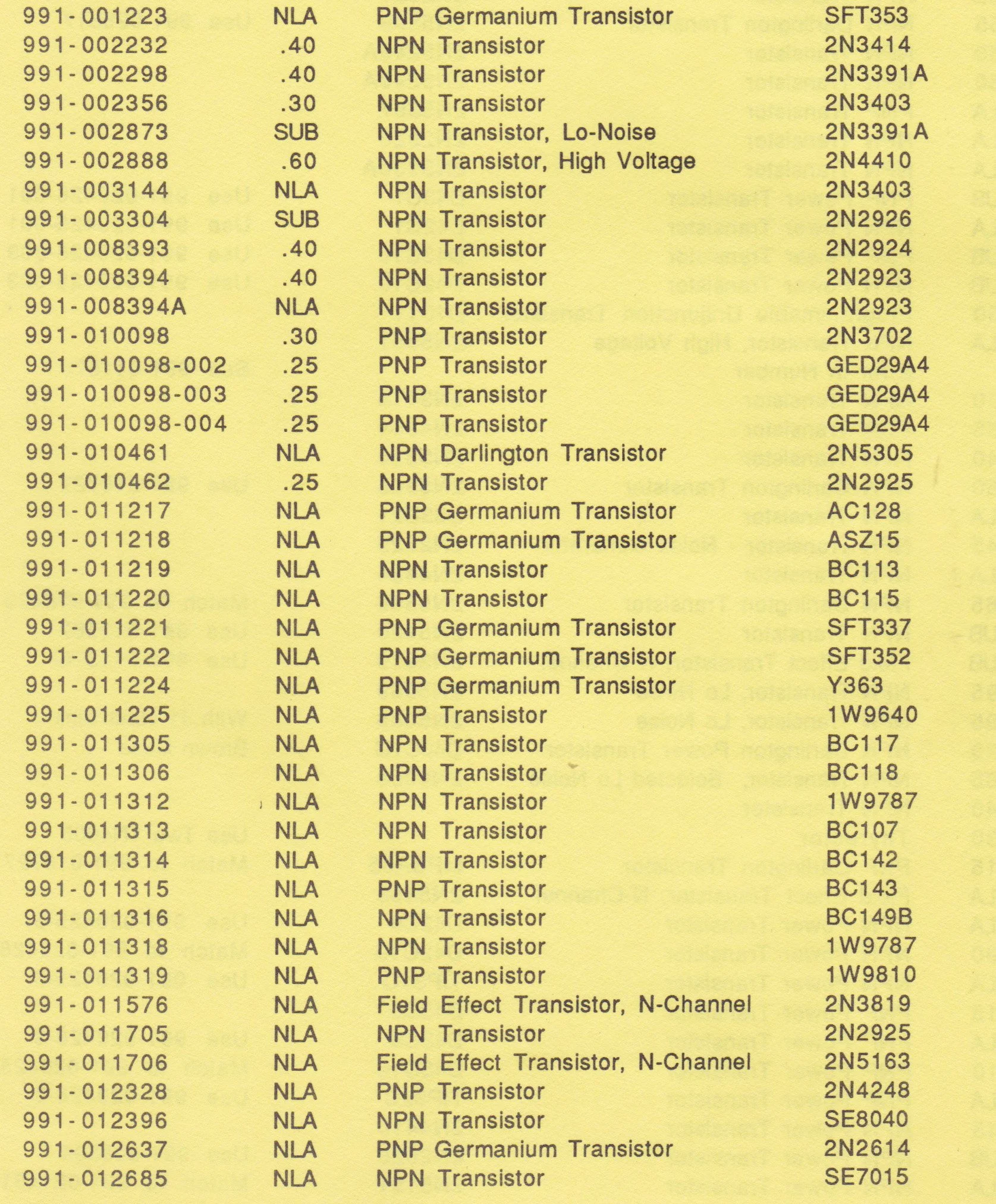
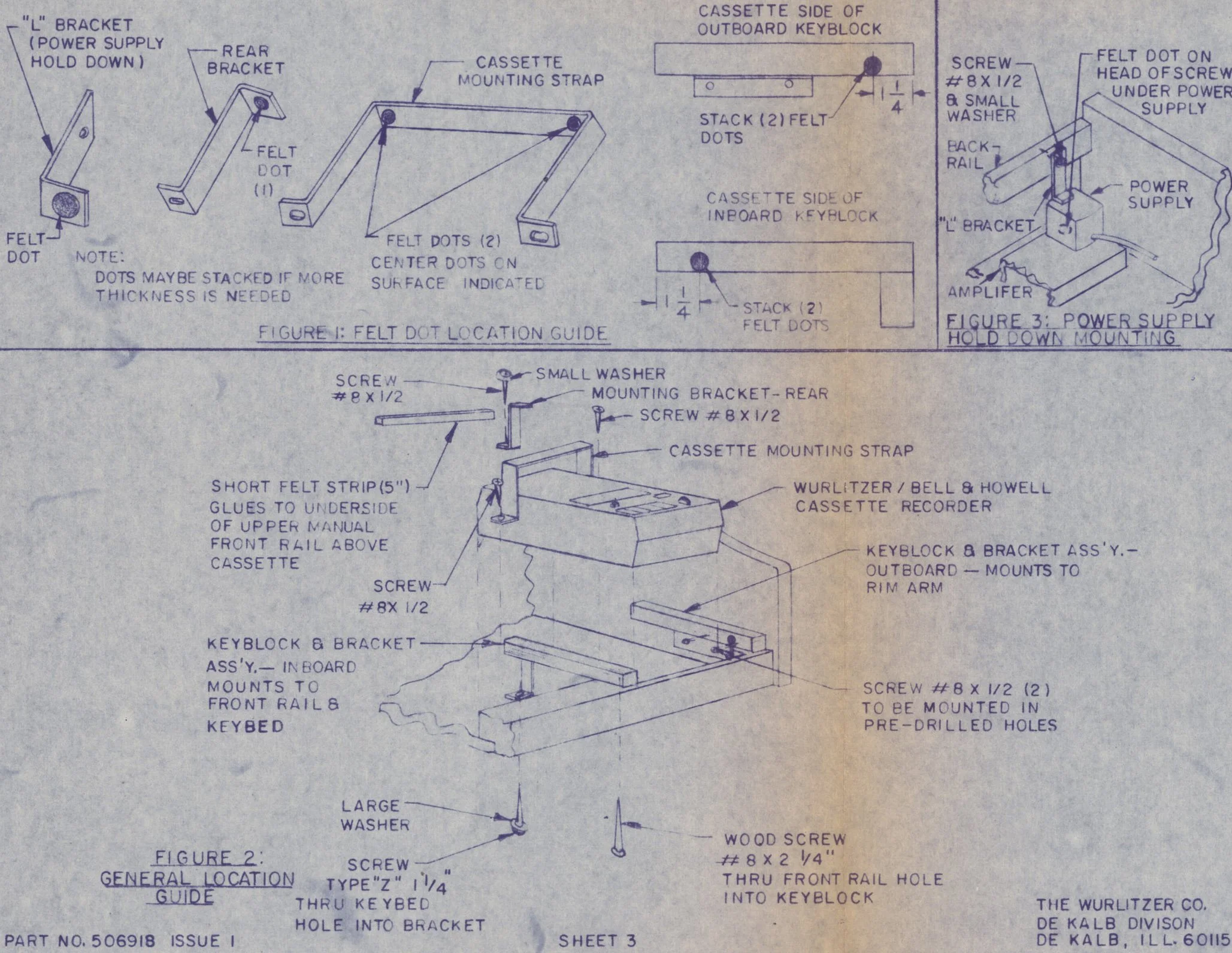
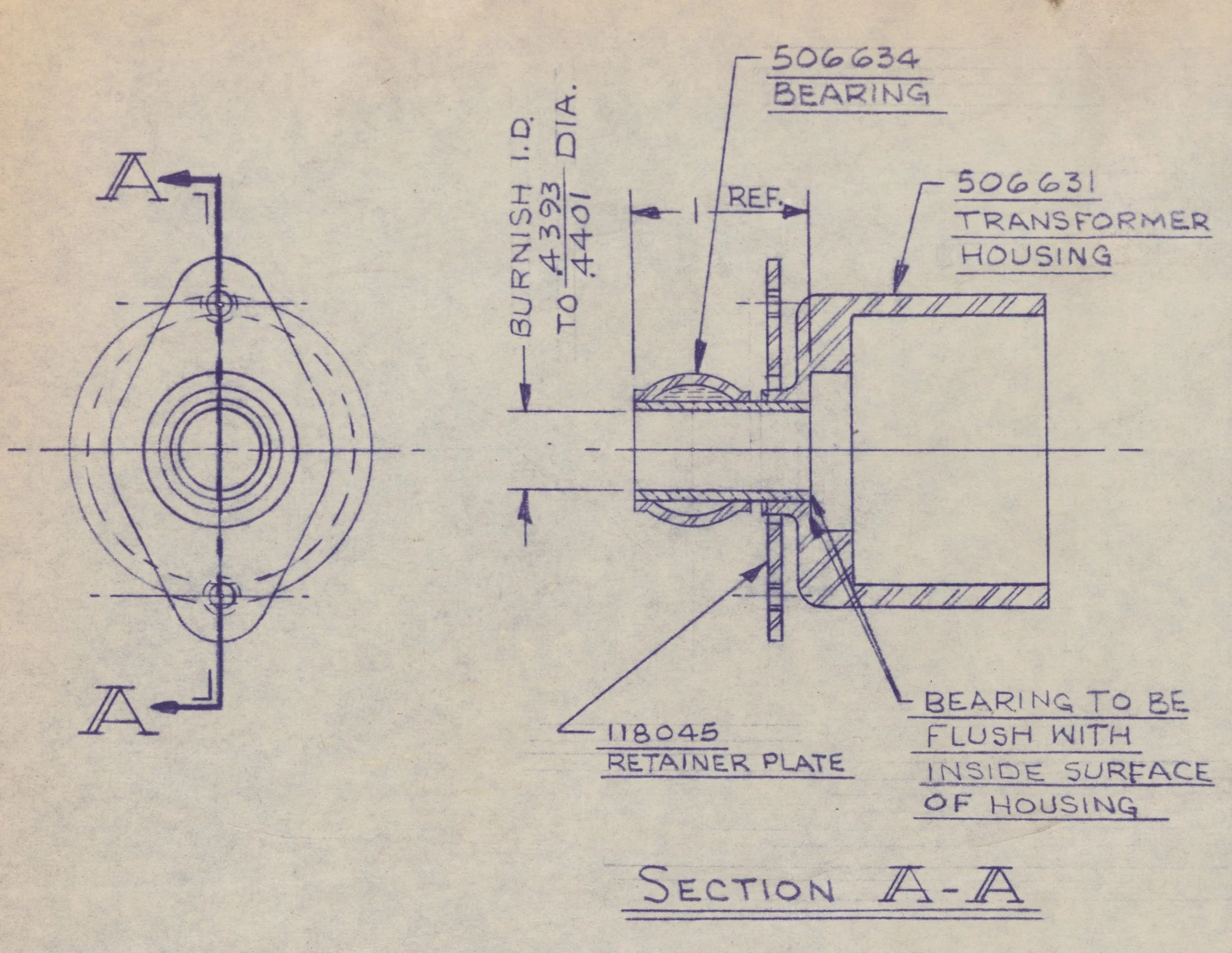
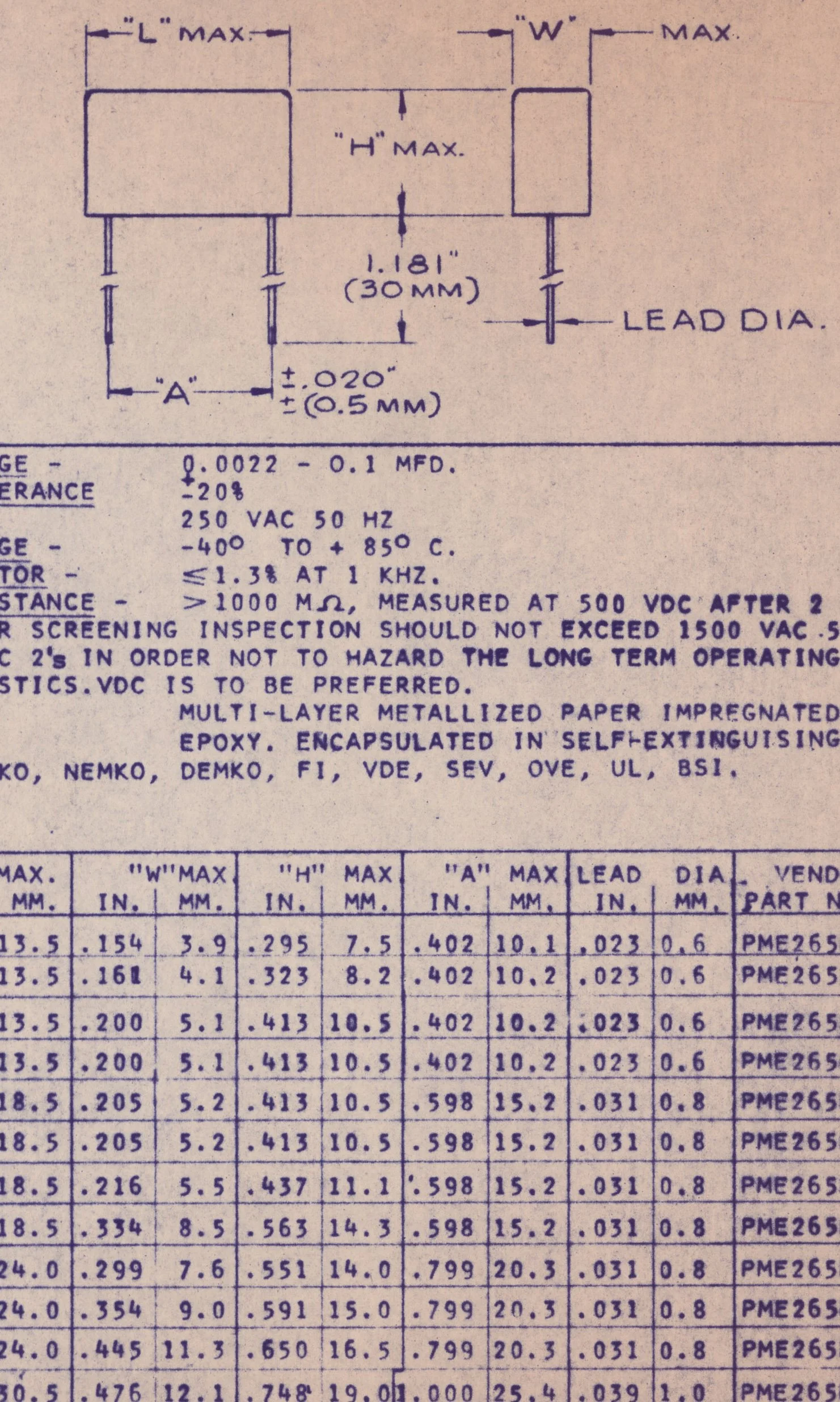
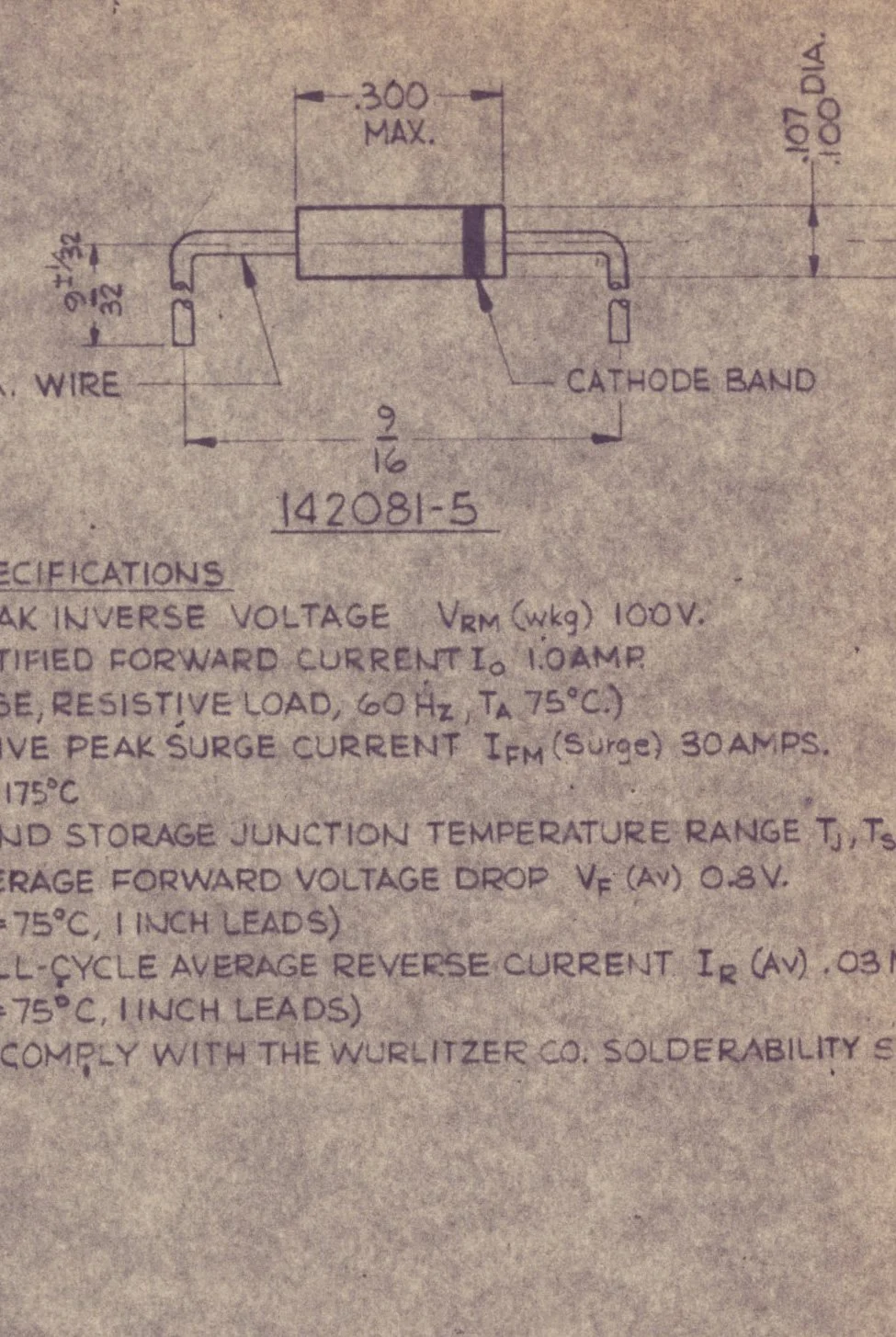
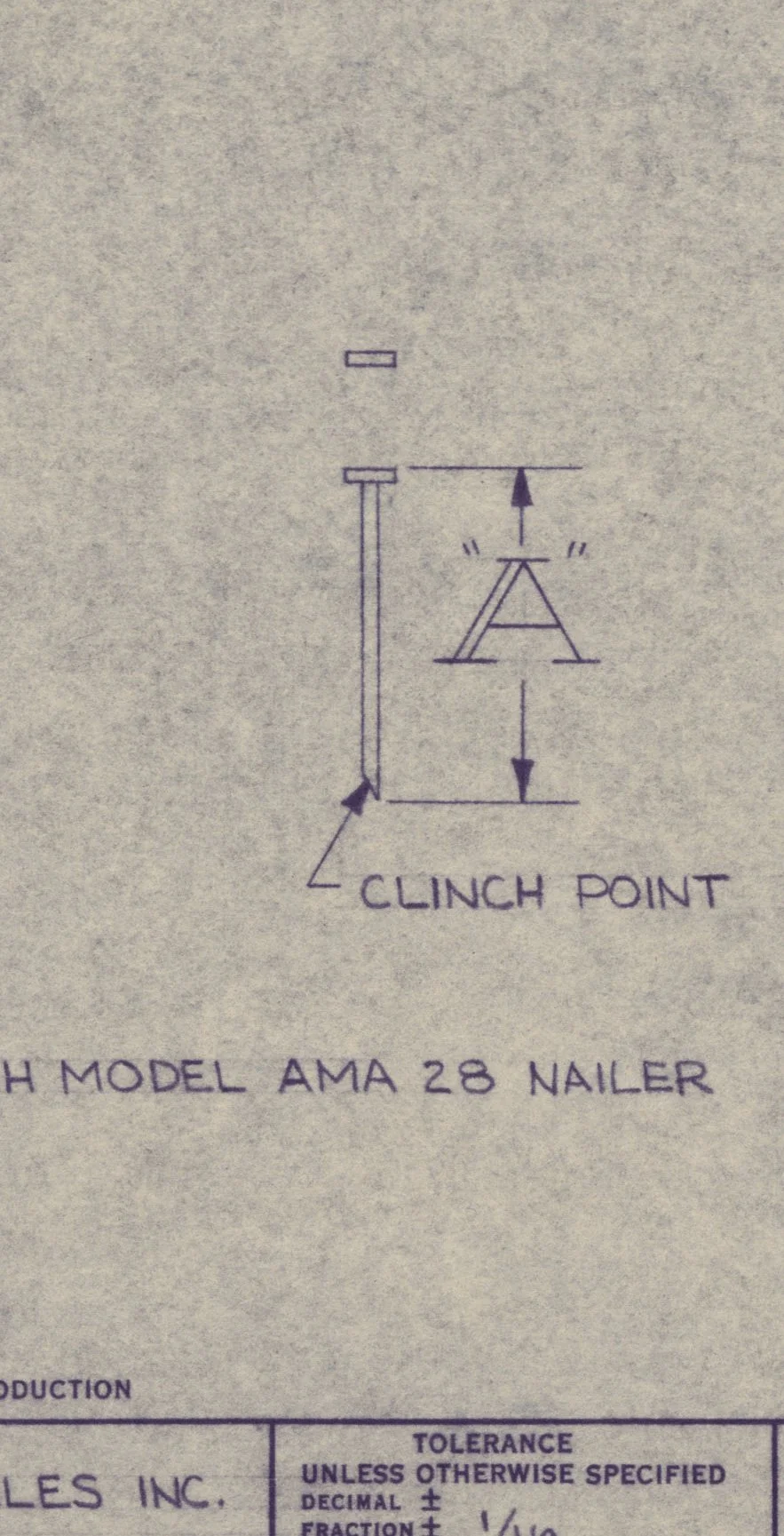
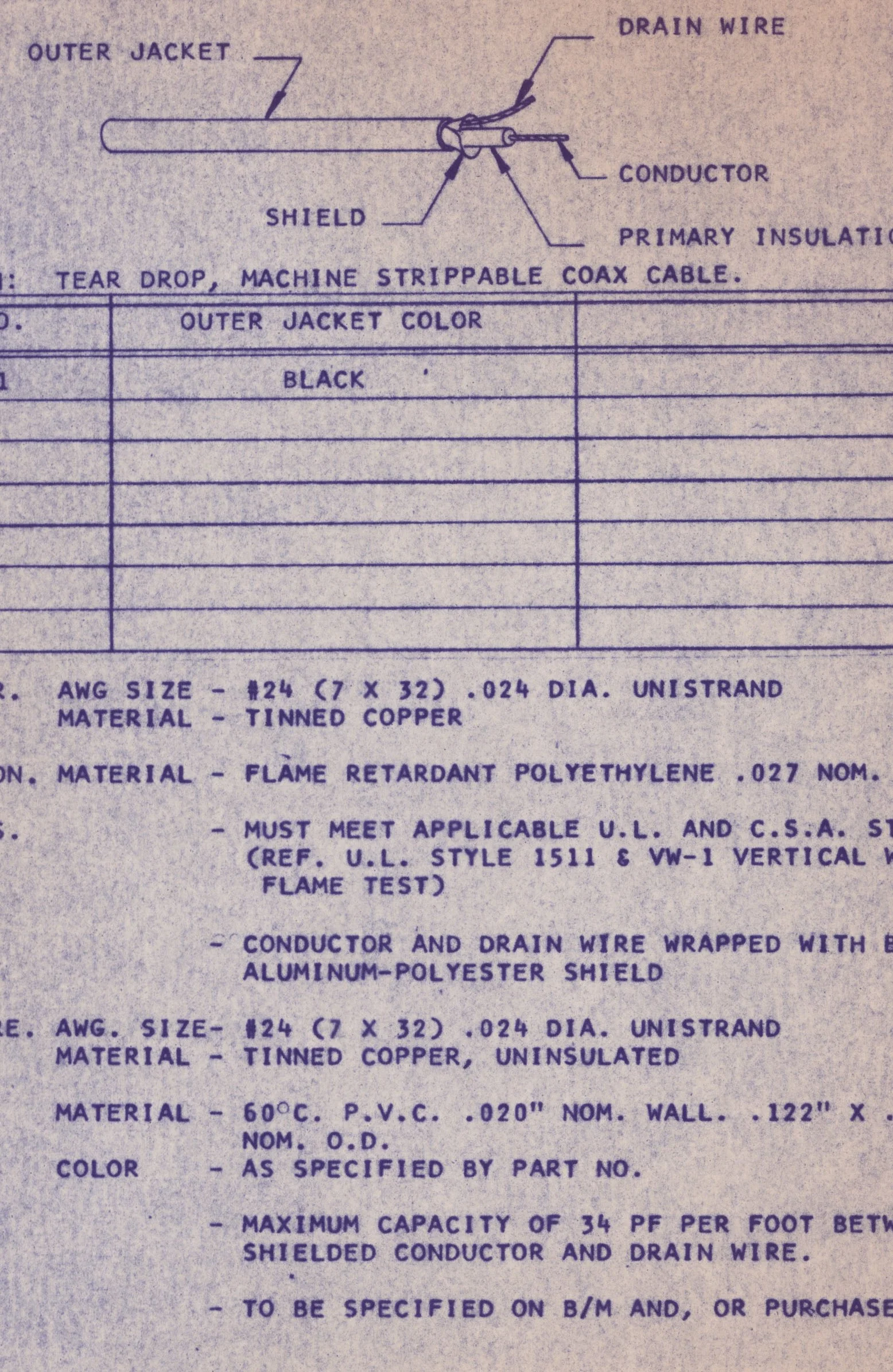
Many drawings depict generic parts that were used for multiple instrument models. Although they include mundane objects like screws and nails, these drawings are an important window into the development of assembly techniques that make it possible to manufacture complex products like organs.
Choose a category to begin browsing. Or, click here if you would like to see all categories.

Browse service manuals & documentation
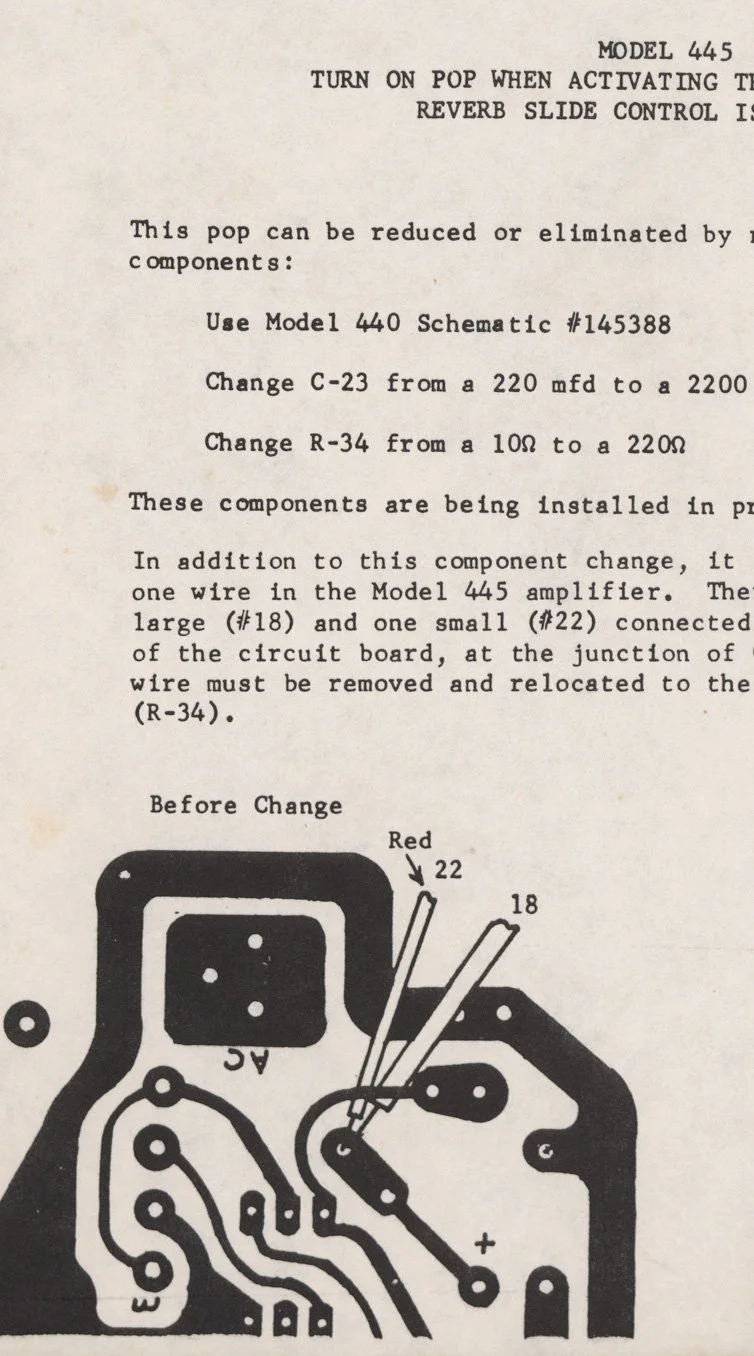
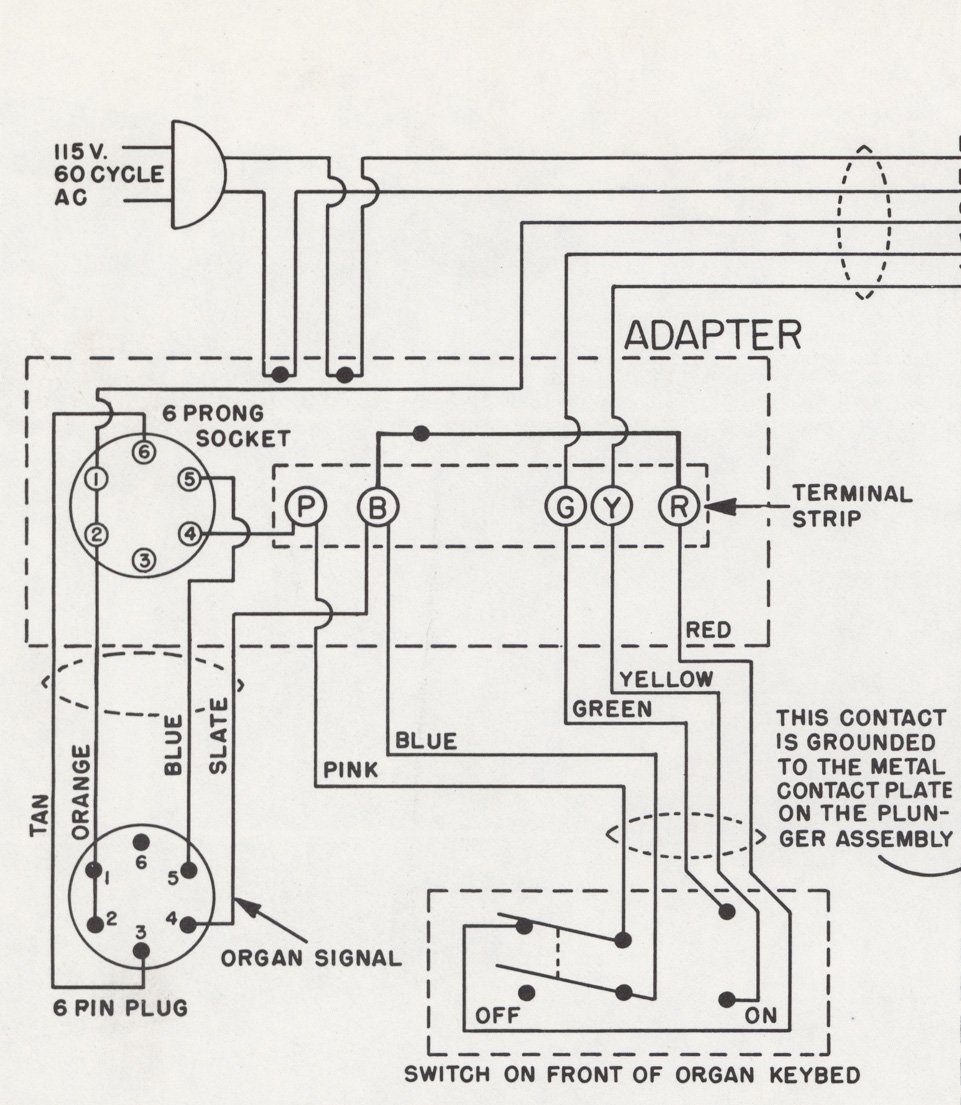
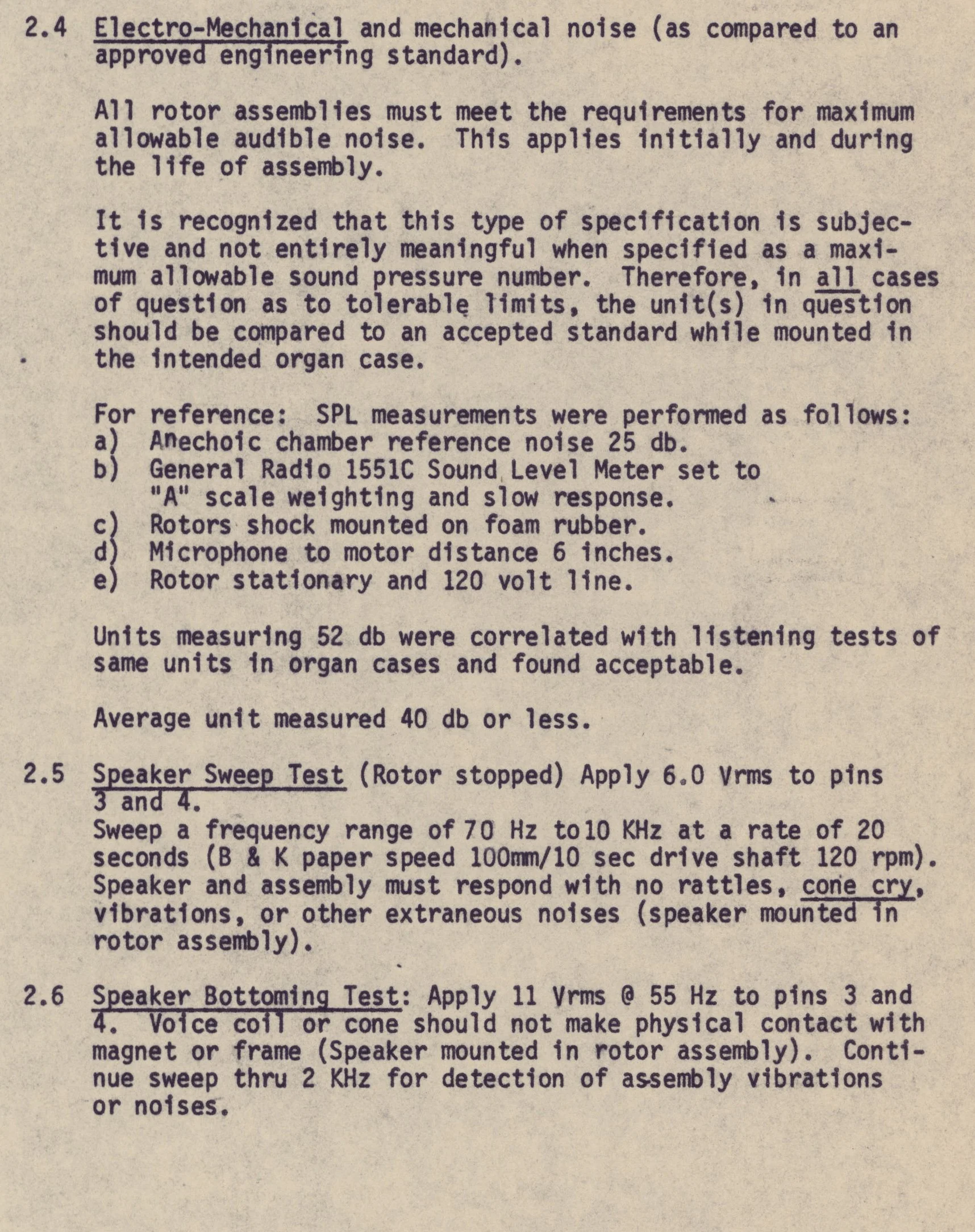
Service manuals, distinct from user manuals, explain repair and maintenance procedures for an instrument. Service manuals are required reading for anyone who would like to keep a vintage instrument in good working order. They’re also an excellent resource for understanding how electronic instruments worked, and how they were originally intended to be used.
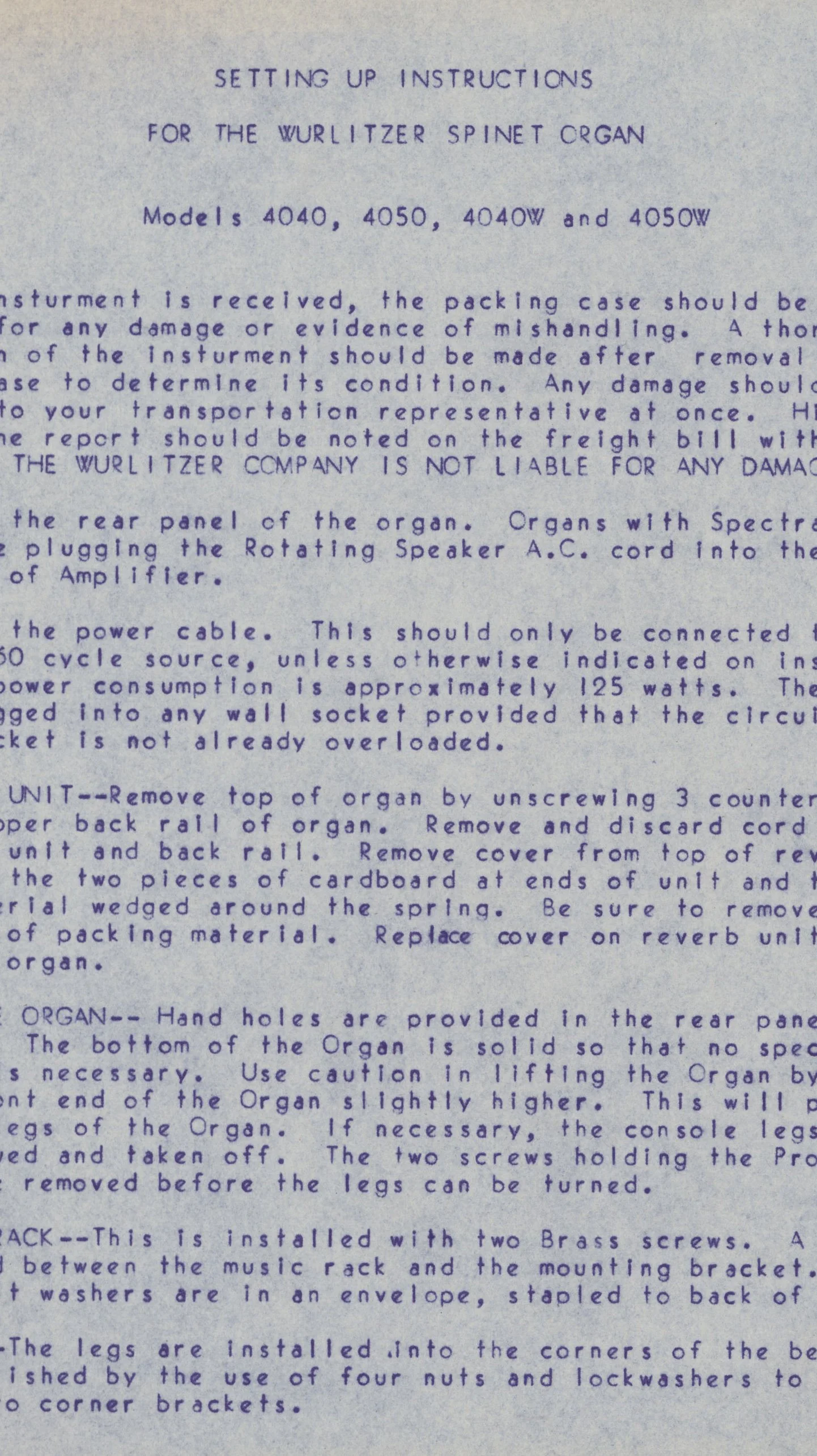
The collection includes many service manuals, as well as supplemental documentation like technical notes and newsletters. To make the archive more usable, we are seeking service manuals, user manuals, and other useful documents that we do not currently have. Contact us if you would like to contribute documentation to the archive.